
Potato Soup

I still remember the first time I made potato soup for my family. It was a chilly winter evening, and we all gathered around the table, eager to warm up with a delicious and comforting meal. As we took our first spoons, the flavors and textures melded together in perfect harmony, and we knew we had a new favorite recipe.
As a home cook, I've always been passionate about creating dishes that are not only delicious but also nutritious and balanced. And potato soup is one of those recipes that fits the bill perfectly. With its combination of complex carbohydrates, fiber-rich vegetables, and lean protein, it's a meal that will keep you full and satisfied without spiking your blood sugar levels.
One of the things I love about this recipe is its versatility. You can make it with a variety of potatoes, from Russet to Yukon Gold, and add your favorite vegetables to suit your taste. And if you're looking for a creamier soup, you can always add a splash of milk or cream. The possibilities are endless, and I'm excited to share this recipe with you.
Whether you're a busy weeknight cook or a weekend meal prep enthusiast, this potato soup recipe is perfect for you. It's easy to make, customizable to your taste, and can be refrigerated or frozen for later use. So go ahead, give it a try, and enjoy the comforting warmth of a delicious homemade potato soup.
In this recipe, we'll take you through the step-by-step process of making a delicious and balanced potato soup. From the initial prep work to the final touches, we'll cover everything you need to know to create a dish that's both nourishing and flavorful.
Why You’ll Love This Recipe
- This recipe is easy to make and requires minimal prep work.
- The soup is highly customizable, so you can add your favorite vegetables and spices to suit your taste.
- It's a great way to use up leftover vegetables and reduce food waste.
- The soup is comforting and satisfying, making it perfect for a chilly evening or a special occasion.
- It's a balanced and nutritious meal that's suitable for a variety of dietary needs and preferences.
- You can make it ahead of time and refrigerate or freeze it for later use.
Why This Recipe Works
The key to a great potato soup is in the layers of flavor and texture. By sautéing the onions and garlic before adding the potatoes and vegetables, we create a rich and aromatic base that sets the tone for the rest of the dish. Then, by adding a combination of chicken broth and milk, we achieve a creamy and velvety texture that's both comforting and satisfying.
Another important aspect of this recipe is the use of fiber-rich vegetables like carrots and celery. These add natural sweetness and depth to the soup, while also providing a boost of vitamins and minerals. And by using lean protein sources like chicken or turkey, we keep the dish balanced and nutritious.
Finally, the resting time is crucial in allowing the flavors to meld together and the soup to thicken slightly. This step may seem insignificant, but it makes a huge difference in the final result, and it's worth the wait.
Ingredients You’ll Need
When it comes to making a delicious potato soup, the ingredients are just as important as the technique. You'll need a combination of high-quality potatoes, flavorful vegetables, and lean protein sources to create a dish that's both nourishing and flavorful. Here are the ingredients you'll need to get started:
Be sure to choose potatoes that are high in fiber and antioxidants, such as Russet or Yukon Gold. You'll also want to select vegetables that are fresh and in season, such as carrots, celery, and onions. And don't forget to add some lean protein sources like chicken or turkey to keep the dish balanced and nutritious.
- 2 tablespoons olive oilUse a high-quality olive oil that's rich in antioxidants and has a mild flavor. This will help to bring out the natural flavors of the vegetables and potatoes.
- 1 large onion, choppedChoose an onion that's sweet and flavorful, such as a Vidalia or a yellow onion. This will add a depth of flavor to the soup without overpowering the other ingredients.
- 3 cloves garlic, mincedUse fresh garlic for the best flavor. You can also roast the garlic before mincing it for an added layer of flavor.
- 2 cups diced potatoesChoose potatoes that are high in fiber and antioxidants, such as Russet or Yukon Gold. These will add natural sweetness and depth to the soup.
- 1 cup diced carrotsUse fresh carrots that are sweet and crunchy. These will add a pop of color and flavor to the soup.
- 1 cup diced celeryChoose celery that's fresh and crunchy. This will add a fresh flavor and texture to the soup.
- 1 teaspoon dried thymeUse fresh or dried thyme to add a savory and slightly minty flavor to the soup. You can also substitute with other herbs like rosemary or parsley.
- 1/2 teaspoon saltUse a high-quality salt that's rich in minerals and has a mild flavor. This will help to bring out the natural flavors of the ingredients without overpowering them.
- 1/4 teaspoon black pepperUse freshly ground black pepper to add a sharp and peppery flavor to the soup. You can also substitute with other spices like paprika or cayenne pepper.
- 4 cups chicken brothUse a low-sodium chicken broth to keep the dish balanced and nutritious. You can also make your own broth from scratch using chicken bones and vegetables.
- 1 cup milk or creamUse a low-fat milk or cream to add a creamy and velvety texture to the soup. You can also substitute with a non-dairy milk alternative like almond or soy milk.

Equipment You’ll Need
How to Make Potato Soup
- 1Heat the olive oil in a large heavy pot or Dutch oven over medium heat. Add the chopped onion and sauté until softened, about 5 minutes.
- 2Add the minced garlic and sauté for an additional 1-2 minutes, until fragrant.
- 3Add the diced potatoes, carrots, and celery, and sauté for 5 minutes, until they begin to soften.
- 4Add the dried thyme, salt, and black pepper, and stir to combine.
- 5Pour in the chicken broth and bring the mixture to a boil. Reduce the heat to low and simmer for 15-20 minutes, until the potatoes and vegetables are tender.
- 6Use an immersion blender or regular blender to puree the soup until smooth.
- 7Return the soup to the pot and add the milk or cream. Stir to combine and heat over low heat until warmed through.
- 8Taste and adjust the seasoning as needed.
- 9Serve the soup hot, garnished with chopped fresh herbs or a sprinkle of paprika.
- 10Let the soup rest for 10-15 minutes before serving to allow the flavors to meld together.
- 11Refrigerate or freeze the soup for later use. Reheat gently over low heat, stirring occasionally, until warmed through.
Expert Tips
- Use a variety of potatoes for a more complex flavor and texture.
- Add other vegetables like diced bell peppers or chopped kale to the soup for added flavor and nutrition.
- Use a low-sodium broth to keep the dish balanced and nutritious.
- Add a splash of milk or cream to the soup for a creamy and velvety texture.
- Let the soup rest for 10-15 minutes before serving to allow the flavors to meld together.
- Reheat the soup gently over low heat, stirring occasionally, until warmed through.
- Experiment with different spices and herbs to find your favorite flavor combination.
- Make the soup ahead of time and refrigerate or freeze it for later use.
Common Mistakes to Avoid
- Not using a variety of potatoes for a more complex flavor and texture.
- Overcooking the potatoes and vegetables, resulting in a mushy texture.
- Not using a low-sodium broth, resulting in a dish that's too salty.
- Not letting the soup rest for 10-15 minutes before serving, resulting in a soup that's not fully flavored.
- Reheating the soup too quickly, resulting in a soup that's not warmed through.
- Not experimenting with different spices and herbs to find your favorite flavor combination.
Variations and Substitutions
- Add diced cooked chicken or turkey to the soup for added protein.
- Use a variety of vegetables like diced bell peppers or chopped kale to add flavor and nutrition.
- Add a splash of milk or cream to the soup for a creamy and velvety texture.
- Experiment with different spices and herbs to find your favorite flavor combination.
- Make the soup ahead of time and refrigerate or freeze it for later use.
- Use a low-sodium broth to keep the dish balanced and nutritious.
- Add some heat to the soup with a diced jalapeno or serrano pepper.
What to Serve With Potato Soup
Serve the potato soup hot, garnished with chopped fresh herbs or a sprinkle of paprika. You can also serve it with a side of crusty bread or a green salad for a more filling meal.
Some other ideas for serving the soup include:
Make-Ahead, Storage, Freezing and Reheating
The potato soup can be refrigerated for up to 3 days or frozen for up to 2 months. To refrigerate, let the soup cool to room temperature, then transfer it to an airtight container and store it in the refrigerator.
To freeze, let the soup cool to room temperature, then transfer it to a freezer-safe container or bag and store it in the freezer. Reheat the soup gently over low heat, stirring occasionally, until warmed through.
When reheating the soup, be sure to stir it occasionally to prevent scorching. You can also add a splash of milk or cream to the soup to thin it out and add creaminess.
Frequently Asked Questions
Can I make the potato soup ahead of time?
Yes, you can make the potato soup ahead of time and refrigerate or freeze it for later use. Reheat the soup gently over low heat, stirring occasionally, until warmed through.
Can I use a variety of potatoes for the soup?
Yes, you can use a variety of potatoes for the soup. This will add a more complex flavor and texture to the dish.
Can I add other vegetables to the soup?
Yes, you can add other vegetables to the soup, such as diced bell peppers or chopped kale. This will add flavor and nutrition to the dish.
Can I use a low-sodium broth for the soup?
Yes, you can use a low-sodium broth for the soup. This will help to keep the dish balanced and nutritious.
Can I add protein to the soup?
Yes, you can add protein to the soup, such as diced cooked chicken or turkey. This will add flavor and nutrition to the dish.
Can I freeze the soup?
Yes, you can freeze the soup. Let it cool to room temperature, then transfer it to a freezer-safe container or bag and store it in the freezer. Reheat the soup gently over low heat, stirring occasionally, until warmed through.
How long does the soup last in the refrigerator?
The soup will last for up to 3 days in the refrigerator. Be sure to store it in an airtight container and keep it refrigerated at a temperature of 40°F (4°C) or below.
Can I reheat the soup in the microwave?
Yes, you can reheat the soup in the microwave. However, be careful not to overheat the soup, as this can cause it to become too hot and potentially scalding. Stir the soup occasionally while reheating to prevent scorching.
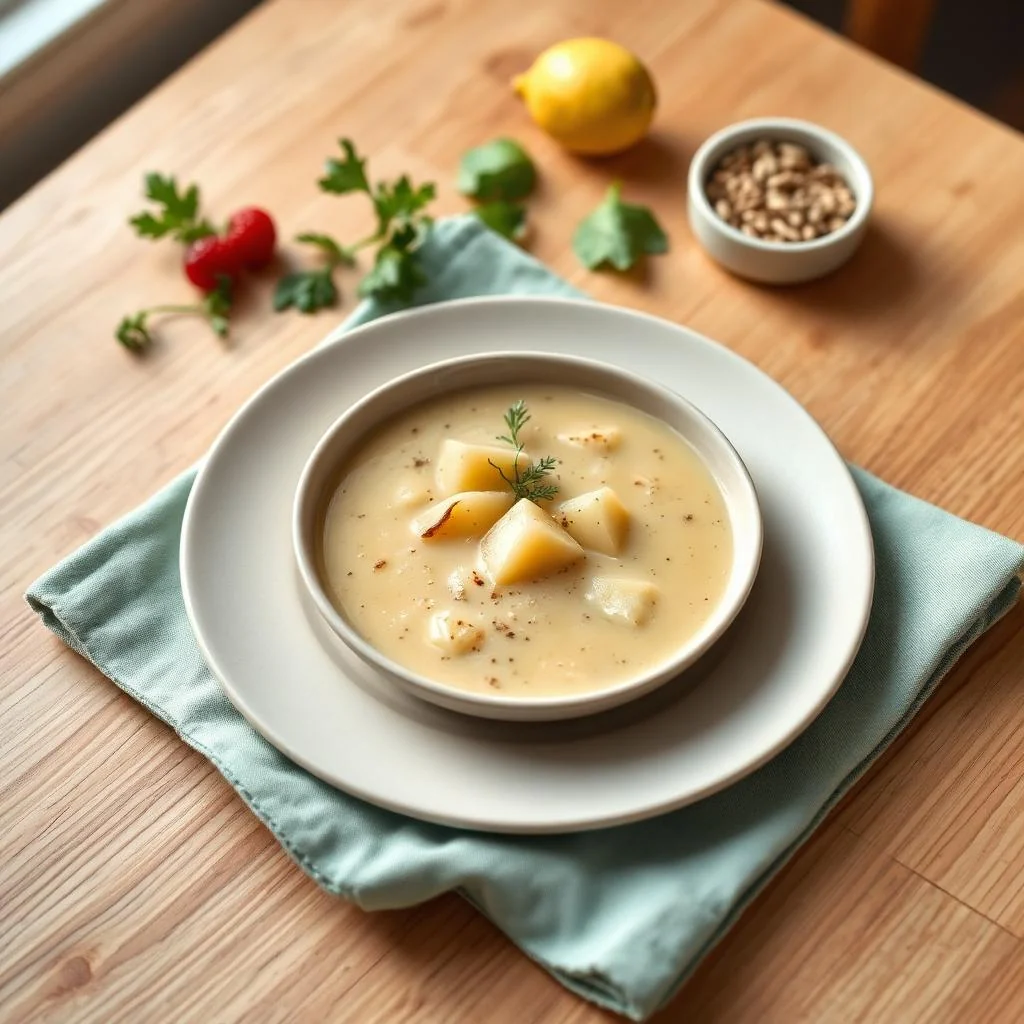
Ingredients
- 2 tablespoons olive oil
- 1 large onion, chopped
- 3 cloves garlic, minced
- 2 cups diced potatoes
- 1 cup diced carrots
- 1 cup diced celery
- 1 teaspoon dried thyme
- 1/2 teaspoon salt
- 1/4 teaspoon black pepper
- 4 cups chicken broth
- 1 cup milk or cream
Instructions
- Heat the olive oil in a large heavy pot or Dutch oven over medium heat. Add the chopped onion and sauté until softened, about 5 minutes.
- Add the minced garlic and sauté for an additional 1-2 minutes, until fragrant.
- Add the diced potatoes, carrots, and celery, and sauté for 5 minutes, until they begin to soften.
- Add the dried thyme, salt, and black pepper, and stir to combine.
- Pour in the chicken broth and bring the mixture to a boil. Reduce the heat to low and simmer for 15-20 minutes, until the potatoes and vegetables are tender.
- Use an immersion blender or regular blender to puree the soup until smooth.
- Return the soup to the pot and add the milk or cream. Stir to combine and heat over low heat until warmed through.
- Taste and adjust the seasoning as needed.
- Serve the soup hot, garnished with chopped fresh herbs or a sprinkle of paprika.
- Let the soup rest for 10-15 minutes before serving to allow the flavors to meld together.
- Refrigerate or freeze the soup for later use. Reheat gently over low heat, stirring occasionally, until warmed through.