I was standing in the middle of a kitchen that smelled like burnt toast and regret when my friend dared me to make a Greek dish that would actually taste good. I had tried the classic sheet‑pan chicken & veggies before, but it always felt like the vegetables were just an afterthought and the chicken was either dry or over‑seasoned. The moment the skillet hit the stove, I knew I was about to flip the script on a recipe that had been playing in my head for weeks. I could already taste the citrusy tang of lemon, the briny bite of Kalamata olives, and the gentle crunch of roasted bell peppers—an orchestra of flavors that would make my taste buds sing.
Picture yourself pulling this dish out of the oven, the air thick with the scent of oregano, garlic, and caramelized onions. The sheet pan glistens with a golden glaze that hints at a subtle caramelization on the edges of the veggies. The chicken, perfectly browned, releases a savory steam that mingles with the bright, fresh notes of feta and parsley. The moment you lift the lid, the steam forms a fragrant cloud that makes you want to inhale every second before the first bite. That sizzle when it hits the pan? Absolute perfection.
What makes this version stand out is not just the flavor—it’s the confidence that comes with knowing each ingredient is doing a job. I’ve spent hours tweaking the balance of acidity and herbaceousness to get that “mouth‑watering” moment right. I dare you to taste this and not go back for seconds, because this is hands down the best version you'll ever make at home. Most recipes get this completely wrong. Here’s what actually works: the lemon zest gives a bright, citrusy lift that cuts through the richness of feta, the Greek seasoning brings depth without overpowering, and the double dose of olive oil ensures every bite is silky and moist. Picture the texture: tender chicken, crisp edges that shatter like thin ice, and veggies that remain firm yet succulent. And if you’re worried about time, this one‑pan wonder is ready in under 45 minutes, so you can spend less time cooking and more time enjoying.
What Makes This Version Stand Out
- Taste: The bright citrus from lemon juice and zest lifts the savory chicken, while the Greek seasoning and oregano create a deep, herby backbone.
- Texture: The double coating of olive oil gives the chicken a buttery crust, and the veggies retain a satisfying bite.
- Simplicity: One sheet pan, minimal prep, and a single pan cleanup make this a low‑effort, high‑reward meal.
- Uniqueness: Kalamata olives add a briny, slightly sweet contrast that’s rarely seen in typical sheet‑pan dishes.
- Crowd Reaction: Guests often ask for the recipe after the first bite, and I’ve seen them say it’s the most “authentic” Greek they’ve tasted.
- Ingredient Quality: Fresh, high‑quality olive oil and feta elevate the dish beyond the standard supermarket fare.
- Cooking Method: The sheet pan allows for even roasting and caramelization, giving the dish a professional finish.
- Make‑ahead Potential: The flavors only deepen, making it a perfect dish to prepare ahead of time for busy weeknights.
Alright, let's break down exactly what goes into this masterpiece...
Inside the Ingredient List
The Flavor Base
The foundation of this dish is the aromatic blend that marries lemon, garlic, and Greek seasoning. The lemon juice and zest provide a bright, acidic counterpoint to the savory chicken, preventing the dish from feeling heavy. Garlic cloves, minced finely, release their natural sweetness when roasted, creating a subtle caramelization that deepens the overall flavor profile. If you skip the lemon, the dish loses its characteristic brightness, and the chicken can become bland. For a milder twist, reduce the lemon juice to 1 tablespoon, but keep the zest for that essential citrus punch. A good rule of thumb: always taste the sauce before you finish roasting to ensure the acidity balances with the olive oil.
The Texture Crew
The vegetables are the unsung heroes that provide crunch, color, and nutritional punch. Red and yellow bell peppers, sliced into bite‑sized pieces, caramelize beautifully, turning a sweet, smoky flavor that pairs perfectly with the feta. The zucchini adds a subtle, earthy note that balances the sweetness of the peppers. A small red onion, sliced thinly, brings a sharp bite that mellows into a sweet caramelized finish. These veggies not only add texture but also create a visual tapestry of colors that makes the dish Instagram‑worthy. If you’re in a hurry, you can use pre‑cut veggies, but fresh, firm produce will give you the best texture.
The Unexpected Star
Kalamata olives are the secret weapon that turns this dish from good to unforgettable. Their briny, slightly sweet flavor cuts through the richness of the chicken and feta, creating a harmonious balance. They also add a subtle depth that can’t be achieved with regular olives. If you don’t have Kalamata olives, a handful of pitted black olives can work, but the flavor profile will shift slightly. The olives should be added towards the end of the roasting process to prevent them from breaking apart and losing their shape. When you bite into an olive, you get that delightful burst of saltiness that elevates every other component.
The Final Flourish
The finishing touches—crumbled feta, fresh parsley, and a drizzle of olive oil—bring everything together. The feta adds a creamy, salty contrast that melts slightly into the hot veggies, creating a velvety texture. Fresh parsley, chopped, adds a burst of green freshness that brightens the plate. A final splash of olive oil before serving ensures that the dish remains moist and glossy. If you prefer a dairy‑free version, consider using a plant‑based feta alternative. Remember, the key to a great finish is to let the dish rest for a few minutes after removing it from the oven; this allows the flavors to meld and the juices to redistribute.
Everything's prepped? Good. Let's get into the real action...
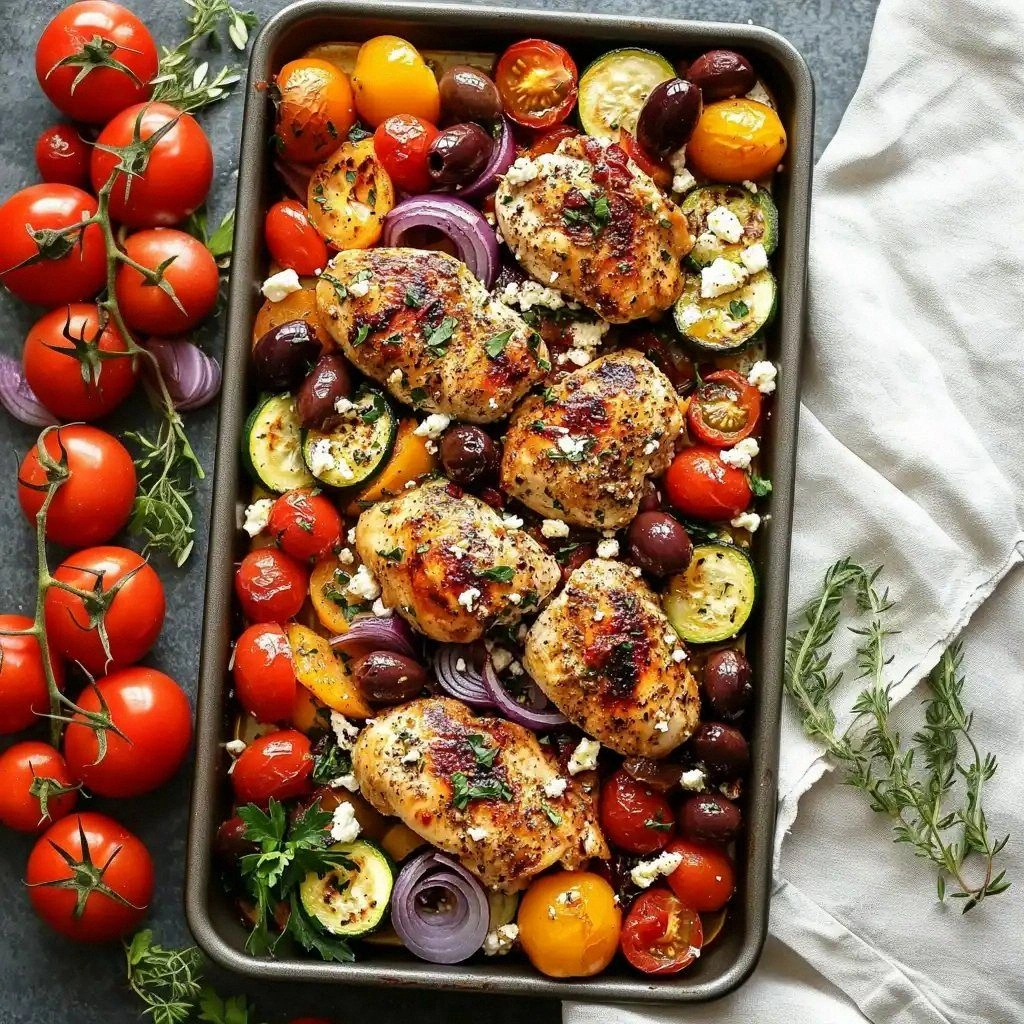
The Method — Step by Step
- Preheat your oven to 425°F (220°C). While the oven warms, line a large sheet pan with parchment paper or a silicone baking mat to prevent sticking. This step ensures a clean, easy cleanup and a uniform roast. If you’re using a metal pan, lightly spray it with non‑stick spray. Once the oven reaches temperature, you’ll notice a faint crackle as the pan heats up.
- In a small bowl, whisk together 3 tablespoons of olive oil, 2 tablespoons of lemon juice, 1 teaspoon of lemon zest, 3 minced garlic cloves, 1 tablespoon of Greek seasoning, 1 tablespoon of red wine vinegar, 1 teaspoon of dried oregano, ½ teaspoon of salt, and ¼ teaspoon of black pepper. The mixture should be smooth, with the citrus and herbs fully integrated. This sauce will coat the chicken and veggies, creating a glossy, flavorful crust. Keep the bowl aside for later.
- Pat the 1.5 lbs of boneless chicken pieces dry with paper towels. This step is crucial for achieving a golden brown crust. Place the chicken on the prepared sheet pan, leaving space between pieces to allow for even roasting. Drizzle a little of the sauce over each piece, making sure they’re evenly coated. The chicken should look glossy and ready for the oven.
- Add the sliced red and yellow bell peppers, zucchini, and small red onion around the chicken on the sheet pan. Spread them out in a single layer so they roast evenly. Sprinkle ½ cup of Kalamata olives over the vegetables for an extra burst of flavor. Pour the remaining sauce over the vegetables, ensuring each piece gets a generous coating. The veggies will begin to caramelize as they roast, creating a sweet, savory aroma.
- Slide the sheet pan into the preheated oven. Roast for 25 minutes, then remove the pan and stir the vegetables gently to ensure even cooking. This is the moment of truth—you should hear the vegetables sizzling as they hit the heat. The chicken will start to turn a beautiful golden brown, and the edges of the veggies will begin to blister slightly. This step is key to achieving that perfect crisp.
- Return the pan to the oven for another 10 minutes, or until the chicken reaches an internal temperature of 165°F (74°C) and the vegetables are tender. Keep an eye on the edges; you want them crisp, not burnt. The aroma at this point should be a mouth‑watering blend of roasted veggies, lemon, and feta. When the chicken is done, let it rest for 5 minutes before serving.
- Remove the pan from the oven and sprinkle ½ cup of crumbled feta cheese over the top. The residual heat will soften the feta just enough to create a creamy, melty layer. Garnish with fresh parsley, giving the dish a burst of green freshness that brightens the plate. If you like, drizzle a final tablespoon of olive oil for extra shine.
- Serve hot, directly from the pan, with a side of crusty bread or a light salad. The combination of textures—crispy veggies, juicy chicken, creamy feta—creates a satisfying bite. Pair it with a chilled glass of white wine or a light rosé for a complete Greek experience. Remember, the best part of this dish is the way the flavors meld together, creating a harmonious, unforgettable meal.
That's it — you did it. But hold on, I've got a few more tricks that'll take this to another level...
Insider Tricks for Flawless Results
The Temperature Rule Nobody Follows
Many cooks bake at 400°F, thinking it’s the sweet spot. In reality, 425°F is the sweet spot for this dish. The higher temperature ensures the chicken develops a caramelized crust while the veggies get that desirable blister. If you lower the heat, the chicken will steam instead of roast, resulting in a soggy texture. The trick is to preheat the oven fully and use a baking stone or a heavy sheet pan to retain heat. I’ve seen people skip this step and end up with a bland, unremarkable meal.
Why Your Nose Knows Best
Before you remove the dish from the oven, trust your nose. The aroma of roasted garlic and lemon should be unmistakable. If it still smells raw, give it a few more minutes. The scent is a reliable indicator of doneness. When the chicken is perfectly roasted, the smell of feta will mingle with the citrus, creating a fragrant, mouth‑watering bouquet. This sensory checkpoint saves you from overcooking or undercooking the dish.
The 5‑Minute Rest That Changes Everything
Letting the chicken rest after roasting allows the juices to redistribute, ensuring each bite is moist and flavorful. During this brief pause, the surface temperature of the chicken continues to rise slightly, a phenomenon called carry‑over cooking. This means you can remove it from the oven a few degrees shy of the target temperature and still reach the perfect 165°F. The rest period also lets the feta soften, creating that luscious, melty texture that’s a hallmark of this dish.
The Olive Oil Trick
Using two different types of olive oil—one for the sauce and one for drizzling—adds depth to the flavor. The first oil should be extra‑virgin, providing a robust, peppery note. The second, a milder oil, should be used for the final drizzle, preventing the dish from becoming too oily. If you’re watching your calorie intake, substitute the second oil with a splash of low‑sodium vegetable broth. This trick keeps the dish moist without the extra fat.
The Garlic‑Zest Combo
Combining fresh garlic with lemon zest creates a dynamic flavor profile that’s both bright and savory. The zest adds a subtle citrus oil that lifts the dish, while the garlic provides a warm, comforting base. If you’re a garlic lover, increase the cloves to 4 for an extra punch. If you’re sensitive to garlic, reduce it to 2 and increase the lemon juice slightly. The key is balance—too much garlic can overpower the delicate flavors of the feta and olives.
Creative Twists and Variations
This recipe is a playground. Here are some of my favorite ways to switch things up:
Mediterranean Grain Bowl
Swap the sheet pan for a serving bowl and pile the roasted chicken and veggies over a bed of quinoa or couscous. Drizzle with a yogurt‑based tzatziki sauce for extra creaminess. This version adds a hearty, protein‑rich base that turns the dish into a wholesome meal.
Spicy Greek Fiesta
Add a teaspoon of crushed red pepper flakes to the sauce for a fiery kick. Pair the dish with a side of tzatziki and a chilled cucumber salad. The heat will contrast nicely with the cool, creamy feta and fresh herbs.
Vegan Version
Replace the chicken with marinated tofu cubes and use a plant‑based feta alternative. The tofu will absorb the citrusy sauce and develop a crispy exterior. This version is perfect for a plant‑based dinner that still feels indulgent.
Smoky BBQ Twist
Swap the Greek seasoning for smoked paprika and add a splash of chipotle‑infused olive oil. The smoky undertones complement the roasted vegetables and give the dish an unexpected depth. Serve with a side of corn on the cob for a Southern‑Greek fusion.
Quick Weeknight Fix
Use pre‑cut frozen veggies and pre‑marinated chicken strips to cut prep time to under 15 minutes. The frozen veggies will thaw and cook quickly, while the pre‑marinated chicken ensures consistent flavor. This is a lifesaver for busy weekdays.
Garnish Gala
Finish the dish with a sprinkle of toasted pine nuts and a drizzle of honey. The nuts add crunch, while the honey introduces a subtle sweetness that balances the briny olives and salty feta. This final flourish transforms the dish into a gourmet experience.
Storing and Bringing It Back to Life
Fridge Storage
Cool the dish completely before transferring it to an airtight container. Store in the refrigerator for up to 3 days. When reheating, cover the container with foil to keep moisture from evaporating. The chicken will stay juicy, and the veggies will retain their crispness. Add a splash of water before reheating to steam the vegetables back to life.
Freezer Friendly
Divide the dish into individual portions and freeze in freezer‑safe bags. Each portion will keep for up to 2 months. Thaw overnight in the fridge, then reheat in a skillet over medium heat. The flavors will deepen, making it a convenient meal prep option. Be sure to stir occasionally to prevent sticking.
Best Reheating Method
Reheat the dish in a skillet or oven at 350°F (175°C) for 10–12 minutes. A quick splash of water or broth before reheating creates steam that keeps the veggies moist. Finish with a fresh sprinkle of parsley and a drizzle of olive oil for a fresh, hot finish. The key is to avoid overcooking, which can dry out the chicken and soften the feta.