I still remember the first time I attempted scalloped potatoes. I was twenty-three, armed with a dull peeler, a casserole dish I’d borrowed from my mom, and the kind of overconfident swagger only a college grad can possess. Two hours later, the kitchen looked like a crime scene of curdled milk and under-seasoned spuds, and my roommates politely choked down gluey slices while pretending they’d “never tasted anything like it.” Fast-forward a decade, dozens of trials, and one tiny epiphany about béchamel ratios, and I finally cracked the code to the most gloriously creamy, bubbling, cheese-pull-worthy scalloped potatoes you’ll ever pull from an oven. If you’ve ever wrestled with watery layers, broken sauces, or potatoes that somehow stay crunchy while the top chars into oblivion, welcome home — we’re fixing this together.
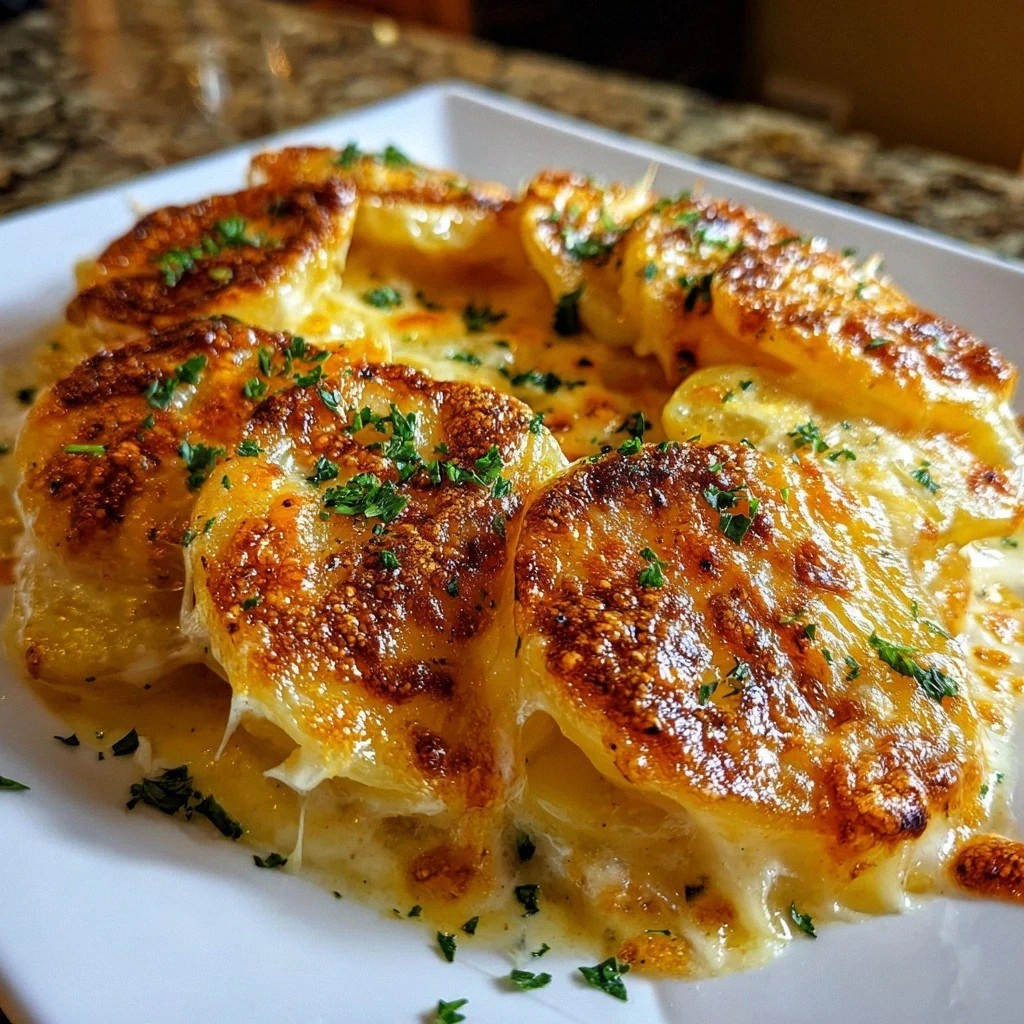
Picture this: wafer-thin coins of Yukon Gold potatoes, each simmering briefly in a silky bath of butter, flour, whole milk, and heavy cream until they drink in the flavor like thirsty little flavor sponges. Between those layers we tuck a triumvirate of cheeses — sharp cheddar for zing, Gruyère for nutty elegance, and Parmesan for that golden, salty crust that shatters like thin ice under your fork. The scent alone should be bottled and sold as “Instant Cozy.” Garlic and onion powders whisper in the background, just enough to remind you they’re there without staging a coup on your palate. When it finally emerges from the oven, the gratin is breathing — tiny cheese bubbles sighing, edges bronzed and crispy, the center jiggling like it’s proud of what it’s become.
But the real magic? The part that separates this recipe from every other “easy” scalloped-potato shortcut on the internet? We treat the sauce like the diva it is — low heat, constant whisking, a single shot of patience — so it thickens into velvet before it ever meets the potatoes. No curdling, no floury pockets, no sad separation. I dare you to taste that sauce off the spoon and not go back for seconds before the dish is even assembled. Stay with me here — this is worth it.
Let me walk you through every single step — by the end, you’ll wonder how you ever made it any other way.
What Makes This Version Stand Out
Triple-Cheese Symphony: Most recipes lean on one cheese and call it a day. We’re conducting a full orchestra — cheddar brings the punch, Gruyère brings the melody, Parmesan brings the fireworks on top. The interplay is so addictive you’ll catch yourself sneaking forkfuls straight from the serving spoon.
Pre-Heat Par-Cook: Instead of dumping raw potatoes into cold liquid and praying, we give them a quick three-minute dip in the bubbling sauce on the stovetop. This jump-starts tenderness and prevents that dreaded grainy, half-raw texture.
Velvet-First Method: The béchamel is cooked until it coats a spoon like liquid suede, then pulled off the heat before the cheeses melt. This prevents stringy clumps and guarantees every layer is enrobed in glossy, uniform cream.
Edge-Lover’s Bonus: We bake low and slow, then blast under the broiler so the perimeter caramelizes into frico-like crisps while the interior stays molten. If you fight over corner brownies, imagine fighting over corner potatoes.
Make-Ahead Hero: Assemble it the night before, refrigerate, and slide into the oven while your roast rests. Flavors mingle, you stay sane, everyone thinks you’re a wizard.
Spud Specificity: Yukon Golds are mandatory — not Russet, not red bliss. Their medium starch and natural buttery sweetness create the cloud-like texture that melts on your tongue.
One-Pan Gratification: No extra skillets, no colanders, no blender. The same enamel pot that builds the sauce cradles the potatoes, then goes straight into the oven. Fewer dishes equals happier cooks.
Alright, let's break down exactly what goes into this masterpiece...
Inside the Ingredient List
The Flavor Base
Butter and flour form the roux — think of them as the bouncer and velvet rope controlling who gets into the club. Use unsalted butter so you wield the salt wand; salted butter varies by brand and can hijack your seasoning. The roux should go blonde, not brown; you want nutty aroma without toasted color stealing the spotlight from later cheeses.
The Texture Crew
Whole milk supplies body, heavy cream supplies swagger. Skimp on either and you’ll land in soup-town. If you’re tempted to swap in half-and-half, know you’ll sacrifice that spoon-standing thickness that keeps the layers distinct instead of sliding into slumps.
The Triple-Cheese Alliance
Sharp cheddar is the extrovert at the party: loud, proud, impossible to ignore. Opt for an 18-month aged block; anything younger lacks complexity, anything older can taste sour when baked. Gruyère is the suave diplomat, melting into stretchy strands with a faint whiff of toasted hazelnuts. Freshly grated Parmesan acts like savory snow, dehydrating on top to create that crave-worthy crust.
The Seasoning Whisperers
Garlic and onion powders disperse evenly, avoiding raw-bite bombs. Fresh pepper crackled at the finish blooms under heat, releasing floral notes. Salt is mission-critical at every layer: potatoes, sauce, topping. Under-season now, weep later.
Everything's prepped? Good. Let's get into the real action...
The Method — Step by Step
- Preheat your oven to 325°F (160°C). Low and slow prevents curdling and gives the potatoes time to bathe in dairy without turning grainy. While it heats, butter a 2-quart baking dish or a 10-inch oven-safe skillet; ceramic retains heat gently and encourages even browning.
- Peel and slice the Yukon Golds to ⅛-inch thickness. A mandoline is your friend here; uniformity equals even cooking. Submerge slices immediately in cold salted water to purge excess starch and stop oxidation. Drain and pat bone-dry — water is the enemy of creamy sauce.
- Start the roux: melt 4 tablespoons unsalted butter over medium heat until it foams but doesn’t brown. Sprinkle ¼ cup all-purpose flour across the surface and whisk like your life depends on it for two full minutes. This cooks out raw flour taste and builds thickening power.
- Stream in 1 cup whole milk and 1 cup heavy cream, alternating small splashes while whisking. Think of it as feeding a cat — slow, patient, no sudden moves. The mixture will thicken to the texture of loose yogurt. Reduce heat to low.
- Season aggressively: ½ teaspoon garlic powder, ½ teaspoon onion powder, 1 teaspoon kosher salt, ½ teaspoon freshly ground black pepper. Stir 30 seconds so the granules hydrate and bloom. Remove pot from heat entirely before cheese enters the chat.
- Fold in 1 cup shredded sharp cheddar and ¾ cup shredded Gruyère a handful at a time, whisking until each addition melts into glossy lava. The residual heat is enough; placing the pot back on the burner risks grainy breakage.
- Add potato slices to the pot, gently stirring to coat every disk. Let them simmer on the lowest flame for 3 minutes; this par-cook means they’ll finish baking in harmony rather than turning into al dente poker chips.
- Layer half the potatoes into the buttered dish, spooning extra sauce over each tier. Scatter remaining cheddar and Gruyère across the mid-layer, then top with the rest of the potatoes. Pour every last drop of sauce, nudging it into crevices with a spatula. The liquid should barely peek above the top layer.
- Cover tightly with foil and bake 45 minutes. Steam builds, finishes cooking potatoes, and prevents premature crusting. After 45 minutes, remove foil, sprinkle ¼ cup grated Parmesan evenly, and crank oven to 425°F (220°C) or switch to broil. Return to oven 8–10 minutes until top is freckled and edges are frico-crisp. That sizzle when it hits the hot air? Absolute perfection.
That's it — you did it. But hold on, I've got a few more tricks that'll take this to another level...
Insider Tricks for Flawless Results
The Temperature Rule Nobody Follows
Let the gratin rest 10 minutes after baking. I know, the aroma is taunting you, but carry-over heat finishes setting the sauce so it slices into neat squares instead of oozing like molten lava across the platter. Cover loosely with foil to keep warm; the top stays crisp thanks to residual steam escape.
Why Your Nose Knows Best
When you smell nutty, toasty cheese, broiling is done. Ovens vary, so don’t trust the clock alone. Pull it the second the perfume shifts from creamy to caramel — another thirty seconds and you’ve crossed into bitter turf. Trust your olfactory alarm bell; it’s never wrong.
The 5-Minute Rest That Changes Everything
After the final broil, tent loosely with foil for exactly five minutes. This allows bubbling to subside, cheeses to re-absorb their own fat, and flavors to settle into perfect harmony. Slice too soon and you’ll lose the gorgeous layering; wait too long and you’ll fight congealed cheese. Five is the sweet spot.
Creative Twists and Variations
This recipe is a playground. Here are some of my favorite ways to switch things up:
Smoky Bacon & Jalapeño
Stir 6 slices of crisped, chopped bacon and a minced seeded jalapeño into the sauce. Cheddar still stars, but the Gruyère becomes smoked Gouda for campfire vibes. Perfect for potlucks where you want audible gasps.
Herb Garden Deluxe
Swap Parmesan for nutty Comté and fold 2 tablespoons each chopped chives, tarragon, and dill into the finished sauce. It tastes like springtime even in January, and the herbs stay vivid because they’re added off-heat.
Truffle & Mushroom
Sauté 8 oz sliced creminis in the butter before adding flour, deglaze with a splash of white wine, then proceed. Finish with a whisper of truffle oil just before serving. Date-night elegance without a reservation.
Veggie Patch
Interleave thin ribbons of zucchini and carrot with the potatoes. They add color, natural sweetness, and lighten the dish so you can justify a bigger scoop. Kids think it’s confetti; parents think it’s vitamins.
Lobster & Leek
Fold 6 oz chopped poached lobster and one sweated leek into the middle cheese layer. Gruyère remains, but cheddar becomes mild fontina so the seafood shines. Serve on New Year’s Eve and watch guests swoon.
Buffalo Blue
Replace half the cheddar with crumbled blue cheese and spike the sauce with 3 tablespoons Buffalo hot sauce. Top with buttered panko for crunch. Game-day nirvana on a fork.
Storing and Bringing It Back to Life
Fridge Storage
Cool completely, then refrigerate in an airtight container up to 4 days. Press plastic wrap directly against the surface to prevent a skin. Flavors deepen overnight, making leftovers the best part.
Freezer Friendly
Freeze individual portions wrapped in foil, then slipped into freezer bags for up to 2 months. Thaw overnight in the fridge. Texture stays creamy because the roux stabilizes the dairy.
Best Reheating Method
Reheat covered at 300°F (150°C) with a splash of milk in the dish until warmed through, then uncover and broil 2 minutes to resurrect the crust. Microwave works in a pinch, but you’ll miss the crackle.