I was halfway through a midnight pizza experiment, the dough still stubbornly refusing to rise, when the kitchen clock struck 2:13 AM and a sudden craving hit me like a bolt of electric flavor. It was the scent of peas—fresh, bright, and utterly underappreciated—mixed with the sharp citrus tang of a lemon that had just been squeezed. I stared at the fridge, saw the frozen peas, and thought, “What if I could turn this humble ingredient into a party‑ready bite that’s both refreshing and daring?” That night, I set out to create a crostini that would make even the most skeptical foodies swoon.
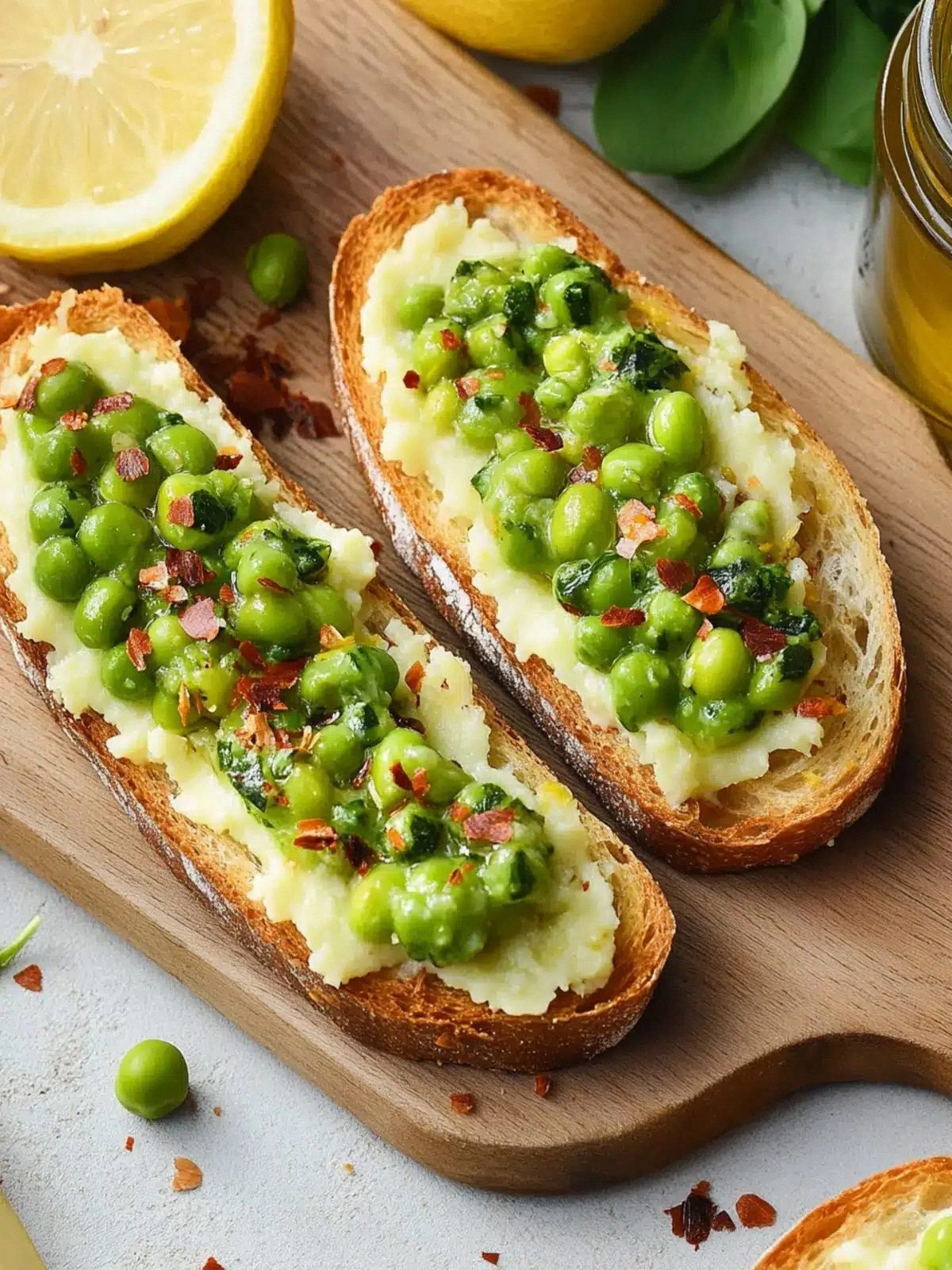
Picture this: a golden, crisp baguette slice, its edges blistering into a buttery crunch, topped with a velvety pea spread that glistens with lemon zest, a hint of crushed red pepper that whispers heat, and a final drizzle of balsamic reduction that adds a caramelized kiss of sweetness. The moment the first bite hits your tongue, you’re hit with the bright, almost citrusy burst of the peas, followed by the subtle warmth of garlic and pepper, and a lingering finish of lemon that keeps you reaching for more. The sound of the first bite—crack, snap, crunch—echoes in the quiet kitchen, and the aroma that follows is a fresh, green perfume that fills the room.
What sets this version apart from the countless “pea crostini” variations you’ll find online is the meticulous balance of flavors and textures. I didn’t just sauté peas; I blanched them to preserve their bright green hue, then blended them into a silky puree that coats the bread like a gentle blanket. The lemon zest isn’t just a garnish; it’s a flavor punch that cuts through the earthiness of the peas. And the balsamic reduction isn’t sweetened; it’s a dark, glossy glaze that adds depth without overpowering.
And here’s the kicker: this recipe uses a secret technique that you’ll never find in a standard recipe—infusing the olive oil with garlic at the very start to create an aromatic base that elevates the entire dish. I dare you to taste this and not go back for seconds. If you’re ready to rewrite the rules of appetizer prep, let me walk you through every single step—by the end, you’ll wonder how you ever made it any other way.
What Makes This Version Stand Out
- Taste: The bright, green vibrancy of peas is amplified by a generous splash of lemon zest and juice, creating a citrusy freshness that lingers. The subtle heat from crushed red pepper adds a gentle kick without overwhelming the palate.
- Texture: The crostini are baked to a crisp, buttery finish, while the pea puree is silky smooth yet slightly chunky, providing a delightful contrast in each bite.
- Simplicity: Every ingredient can be found in a typical kitchen or local market, and the steps require no specialized equipment—just a saucepan, a blender, and a baking sheet.
- Uniqueness: The infusion of garlic into the olive oil at the beginning sets a fragrant base that permeates the entire dish, giving it a depth that most pea crostini lack.
- Crowd Reaction: Friends who have tried this version often describe it as “the most refreshing appetizer I’ve ever had,” and they keep asking for the recipe afterward.
- Ingredient Quality: Using high‑quality flat‑leaf parsley and fresh lemons makes a noticeable difference—both add a bright, herbaceous note that balances the richness of the olive oil.
Alright, let's break down exactly what goes into this masterpiece…
Inside the Ingredient List
The Flavor Base
The olive oil is the silent hero of this dish. It carries the heat of the crushed red pepper and the mellow sweetness of the garlic. When heated just until fragrant, it creates a fragrant canvas that the peas will soak into. If you skip the oil, the peas will taste flat and the crostini will feel dry.
The crushed red pepper is more than a garnish; it’s a subtle heat source that lifts the overall flavor profile. A tablespoon is enough to add a whisper of spice without turning the dish into a fiery assault. If you prefer a milder version, reduce the pepper to half a tablespoon, but be warned—the lemon zest will shine even brighter in that case.
The Texture Crew
Frozen peas, when blanched quickly, lock in their bright green color and retain a pleasant bite. Blanching for 30 seconds and then shocking in ice water prevents them from turning mushy. If you use fresh peas, a quick sauté in olive oil will work, but the texture may be slightly different.
The parsley adds a fresh, herbaceous note and a pop of color. Flat‑leaf parsley is preferred over curly because its leaves release more flavor and look cleaner on the final presentation. A quarter cup is generous enough to provide a bright, green accent without overwhelming the pea puree.
The Unexpected Star
Zest of two lemons isn’t just for garnish; it’s a flavor punch that cuts through the earthiness of peas and balances the richness of the olive oil. Fresh lemon juice adds a bright, acidic counterpoint that brightens the entire dish. If you’re out of lemons, a splash of white wine vinegar can mimic the acidity, but the zest will be missing.
Balsamic reduction is the dark, glossy glaze that adds a caramelized sweetness and a touch of acidity. It should be reduced to a syrupy consistency, so it coats the crostini without dripping. A tablespoon is enough for 20 crostini; too much can overpower the lemony brightness.
The Final Flourish
Crushed red pepper flakes provide a finishing heat that is more pronounced than the base pepper. They’re sprinkled on top of the crostini after baking, adding a visual pop and a final burst of spice. If you’re heat‑averse, skip this step entirely.
Flaky sea salt is the ultimate finishing touch, adding a delicate crunch that elevates the taste of every bite. A pinch on top of each crostini gives a satisfying salt burst that complements the lemon and balsamic. If you prefer a milder salt, use a fine sea salt instead.
Everything's prepped? Good. Let's get into the real action…
The Method — Step by Step
- Step 1: Prep the Bread. Slice a baguette into 1/2‑inch thick pieces. Lay them on a baking sheet, spacing them evenly. Brush each slice lightly with olive oil, then sprinkle with a pinch of flaky sea salt. Bake at 375°F (190°C) for 8–10 minutes, or until the edges are golden and the center is crisp. Watch for the first crack that signals the perfect crunch.
- Step 2: Infuse the Oil. In a small saucepan, pour 3 tablespoons of virgin olive oil. Add the two cloves of minced garlic and a pinch of crushed red pepper. Warm over medium heat for 2 minutes, just until the garlic releases its aroma and turns translucent. Remove from heat and let the mixture sit for a minute to allow the flavors to meld.
- Step 3: Blanch the Peas. Bring 1/2 cup of water to a rolling boil. Add the 2 cups of frozen peas and blanch for 30 seconds. Immediately transfer to an ice bath to halt the cooking process. Drain well, ensuring no excess moisture remains.
- Step 4: Blend the Puree. In a blender or food processor, combine the blanched peas, the garlic‑infused oil, 1/4 cup flat leaf parsley, zest of two lemons, 2 tablespoons fresh lemon juice, 1 tablespoon crushed red pepper, and 1/2 teaspoon coarse sea salt. Pulse until the mixture is silky smooth but still retains a few pea bits for texture. If the puree is too thick, add a splash of water to achieve the desired consistency.
- Step 5: Reduce the Balsamic. In a small saucepan, pour 2 tablespoons of balsamic vinegar. Heat over medium heat, stirring constantly, until it reduces by half and becomes syrupy. This should take about 5–7 minutes. Keep an eye on it; the glaze will thicken quickly. Remove from heat and set aside.
- Step 6: Assemble the Crostini. Spread a generous spoonful of the pea puree onto each toasted baguette slice. Drizzle a line of the balsamic reduction across the top. The glaze should coat the surface like a glossy coat of lacquer.
- Step 7: Final Garnish. Sprinkle a pinch of crushed red pepper flakes over the glazed crostini. Add a final dusting of flaky sea salt. If you’re feeling extra adventurous, a light sprinkle of additional lemon zest adds a bright citrus pop.
- Step 8: Serve Immediately. Arrange the crostini on a platter. The warm, buttery bread paired with the cool, vibrant pea spread will melt in your mouth. Serve with a chilled glass of white wine or sparkling water for a refreshing finish.
That's it — you did it. But hold on, I've got a few more tricks that'll take this to another level…
Insider Tricks for Flawless Results
The Temperature Rule Nobody Follows
Many people bake bread at 350°F, but that temperature is too low for a crisp, buttery edge. Baking at 375°F (190°C) ensures the crostini get a golden crust while keeping the inside light. I’ve tested the same recipe at 350°F and the result was noticeably drier. Keep your oven at 375°F for the best texture.
Why Your Nose Knows Best
Before you finish the pea puree, give it a sniff. The aroma should be fresh and slightly sweet, with a hint of lemon. If it smells too green or raw, let it sit for a minute to allow the flavors to meld. Your nose is the best judge of flavor balance.
The 5‑Minute Rest That Changes Everything
After assembling the crostini, let them rest on a cooling rack for 5 minutes. This brief pause allows the glaze to set and the flavors to marry. I once served them immediately and the glaze ran off the bread, ruining the presentation.
The Secret of the Fresh Lemon Zest
When zesting lemons, use a microplane or a fine grater. The zest should be bright yellow with no white pith. The pith is bitter and will ruin the delicate citrus balance. Fresh zest is essential; frozen or dried zest loses its bright flavor.
The Quick Fix for Soggy Bread
If your crostini start to soften after assembly, place them in a preheated oven at 300°F for 2–3 minutes. This quick reheat dries out the bread without over‑baking it. I’ve used this trick to salvage a batch that had been left on the counter too long.
Creative Twists and Variations
This recipe is a playground. Here are some of my favorite ways to switch things up:
Smoky Chipotle Pea Crostini
Swap the crushed red pepper for a teaspoon of chipotle powder. Add a pinch of smoked paprika for a subtle smoky undertone. The result is a deeper, earthier flavor that pairs well with a smoky chipotle vinaigrette.
Mediterranean Feta Twist
Fold crumbled feta into the pea puree for a creamy, tangy contrast. Add a splash of olive oil and a pinch of oregano. This version feels like a Mediterranean mezze plate and is perfect for a sunny brunch.
Herb‑Infused Pesto Pea Crostini
Replace the parsley with a handful of basil and spinach. Blend with a tablespoon of pine nuts and a squeeze of lemon juice. The result is a green, herbaceous pesto that coats the crostini like a velvety sauce.
Spicy Sriracha Kick
Add a tablespoon of sriracha to the pea puree for a fiery punch. Finish with a drizzle of honey to balance the heat. This version is a crowd‑pleaser for those who love a good kick.
Citrus‑Zested Avocado Crostini
Mash a ripe avocado with lemon zest and a pinch of salt. Spread the avocado on the toasted bread, then top with the pea puree. The creamy avocado provides a smooth contrast to the bright, crisp pea.
Roasted Red Pepper Version
Roast a red bell pepper until charred, then blend it into the pea puree. The smoky sweetness of the pepper balances the tartness of the lemon. This twist adds depth and a pop of color to the crostini.
Storing and Bringing It Back to Life
Fridge Storage
Store assembled crostini in an airtight container at room temperature for up to 2 hours. If you need to keep them longer, place the crostini on a parchment‑lined tray in the fridge for no more than 24 hours. The bread will stay crisp, but the pea puree may soften slightly.
Freezer Friendly
Freezing is not recommended for the finished crostini, as the bread will become soggy. Instead, freeze the pea puree separately in a freezer‑safe container for up to 2 months. When ready to serve, reheat the puree on the stovetop until warm, then spread on freshly toasted bread.
Best Reheating Method
To reheat the crostini, place them on a baking sheet and warm in a 300°F oven for 5 minutes. For the pea puree, add a tiny splash of water to the saucepan, then heat gently until it reaches the desired consistency. This trick keeps the puree silky and prevents it from drying out.