I was standing in my kitchen, staring at a pot of bland, over‑cooked rice and a jar of kimchi that had seen better days. My roommate, a self‑proclaimed Korean food aficionado, tossed a challenge my way: “Make a kimchi stew that even I can’t resist.” I laughed, grabbed my skillet, and decided to turn that dare into a culinary revelation. The moment the kimchi hit the hot pan, the air filled with a sharp, spicy aroma that made my eyes water and my mouth water at the same time.
Picture this: the sizzling sound of kimchi caramelizing, the sharp snap of fresh scallions, and the subtle, umami-rich scent of toasted sesame oil. Your taste buds are hit with a layered punch—spicy, sour, salty, and a hint of sweetness that lingers long after the last bite. The texture is a delightful contrast: the kimchi’s fermented crunch meets the soft, silky pork belly or tofu, all wrapped in a broth that’s both comforting and bold. If you’ve ever eaten a bland Korean stew, this one will make you question why you ever settled for less.
What sets this version apart from the countless variations you’ll find online is the meticulous balance of heat, depth, and freshness. I’ve tweaked the seasoning ratios, introduced a subtle anchovy broth base, and added a surprise ingredient that gives the stew a silky finish—think of it as the velvet coat on a classic dish. This isn’t just another recipe; it’s a statement that homemade kimchi jjigae can be both simple and spectacular.
You’ll notice a twist that most cooks overlook: a splash of fermented soybean paste (doenjang) that deepens the umami without overpowering the kimchi’s character. I’ll also show you how to get that perfect “toasty” flavor on the broth’s surface without burning the pot. By the end of this post, you’ll have a go-to, crowd‑pleasing kimchi jjigae that will make even the skeptics swoon.
Let me walk you through every single step—by the end, you’ll wonder how you ever made it any other way. I dare you to taste this and not go back for seconds. If you’ve ever struggled with the balance of heat and flavor in Korean stews, you’re not alone—and I’ve got the fix.
What Makes This Version Stand Out
- Heat: I’ve calibrated the spiciness with a blend of gochugaru and gochujang, giving the stew a punch that lingers without overwhelming the palate.
- Umami Depth: The addition of anchovy broth and a dash of doenjang unlocks layers of savory complexity that elevate the dish from ordinary to unforgettable.
- Texture Contrast: Tender pork belly or silky tofu paired with crunchy kimchi and fresh scallions creates a mouthfeel that keeps diners coming back.
- Ease: The recipe is streamlined—no complicated steps, just a few key techniques that even novice cooks can master.
- Make‑ahead Potential: The flavors meld beautifully, making this stew ideal for meal prep or a weeknight dinner.
- Versatility: Swap pork for seafood or tofu for a vegetarian version without compromising the dish’s integrity.
Alright, let’s break down exactly what goes into this masterpiece. I’ll also share a quick hack that will save you time and elevate the flavor profile.
Inside the Ingredient List
The Flavor Base
The foundation of any great kimchi jjigae is its broth. I use a simple anchovy broth that brings a natural umami punch, but if you’re short on time, a light vegetable stock works too. The broth should be just hot enough to simmer; a rolling boil will scorch the delicate flavors. Skimming off any foam that rises to the surface keeps the broth clear and the taste clean.
The next layer is the kimchi itself—preferably fermented for at least a week. Fresh kimchi is great, but it’s less flavorful and can be too acidic. Chopping the kimchi into bite‑sized pieces ensures even distribution of flavor throughout the stew. If you’re using very sour kimchi, you can add a splash of rice wine to balance the acidity.
The Texture Crew
Pork belly is my go‑to protein; its fat content gives the stew a silky mouthfeel and a savory depth that tofu can’t match. Slice the pork thinly so it cooks quickly and absorbs the broth. If you’re vegan or simply want a lighter version, firm tofu works wonders—cut into cubes and lightly fried before adding to the pot.
Eggs are optional but highly recommended. Crack them into the simmering broth in the last few minutes; they’ll set into silky ribbons that soak up the flavors. The result is a comforting, protein‑rich finish that makes the dish feel like a complete meal.
The Unexpected Star
Doenjang, or fermented soybean paste, is the secret ingredient that elevates this stew. A tablespoon or two adds depth without overtaking the kimchi’s brightness. It’s a subtle nod to Korean culinary traditions, and it gives the broth a slightly nutty undertone that’s simply irresistible.
The final flourish comes from fresh scallions and a drizzle of sesame oil. The scallions add a bright, green note that cuts through the richness, while the sesame oil imparts a nutty aroma that lingers long after the dish is finished. A squeeze of fresh lime or a sprinkle of gochugaru at the table can give diners a customizable kick.
Everything’s prepped? Good. Let’s get into the real action.
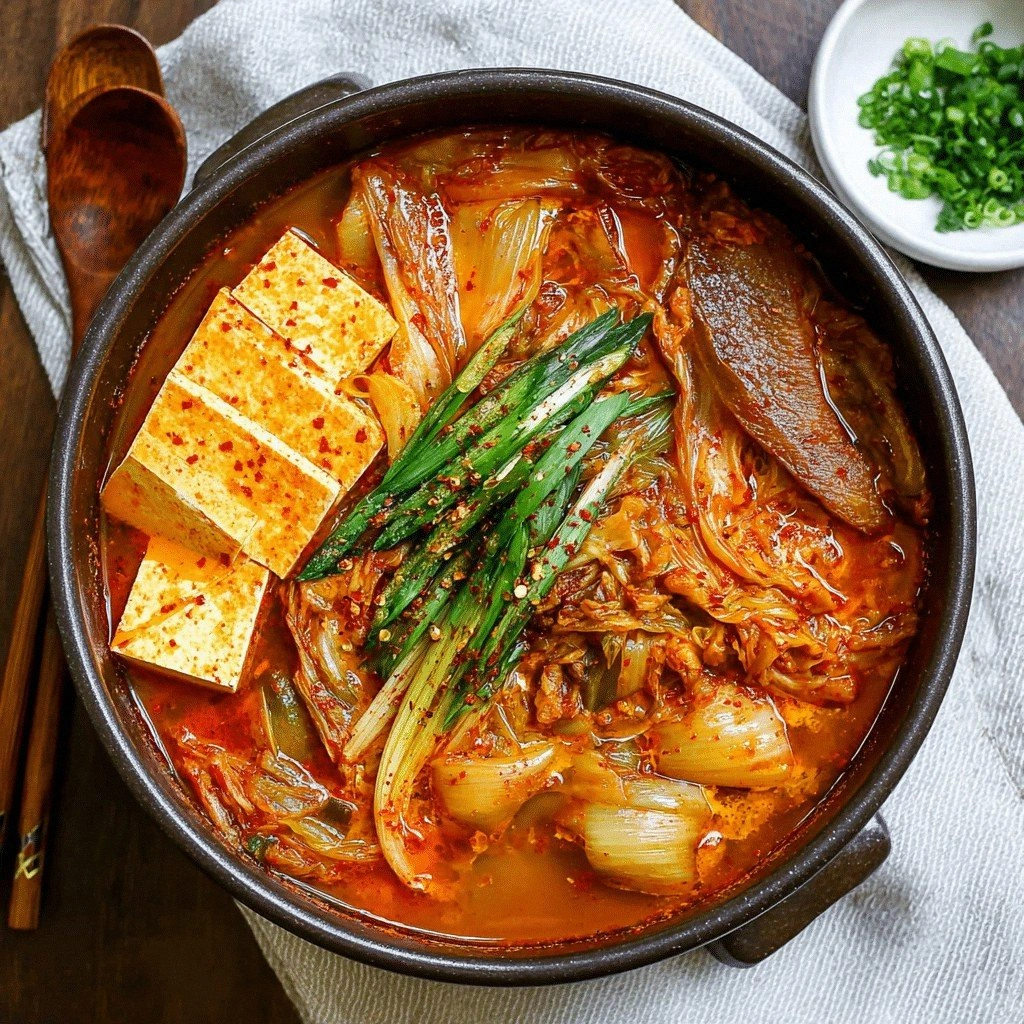
The Method — Step by Step
- Heat a heavy‑bottom pot over medium heat and add the sesame oil. Once the oil shimmers, toss in minced garlic, ginger, and sliced onions. Sauté until the onions turn translucent and the aromatics release a fragrant perfume. This step sets the flavor foundation—don’t skip it.
- Add the sliced pork belly and stir until the edges brown slightly. The pork should develop a caramelized crust that locks in juices. The aroma at this point is a preview of the final dish’s richness.
- Stir in the gochugaru and gochujang, letting them coat the pork and aromatics. Cook for about 30 seconds to release their heat. This is the moment of truth—watch the broth start to darken and the spices bloom.
- Pour in the anchovy broth (or vegetable stock) and bring to a gentle boil. Skim off any foam that surfaces, then reduce to a simmer. The broth should be fragrant and clear, not cloudy.
- Add the chopped kimchi, ensuring it’s evenly distributed. Let the stew simmer for 10 minutes, allowing the kimchi to soften and release its juices. The broth will become slightly thicker and more flavorful.
- Introduce the doenjang, stirring until dissolved. The broth will develop a deeper color and a richer umami profile. Keep the heat low to preserve the delicate balance of flavors.
- If using tofu, gently fold in the cubes at this point. If adding mushrooms or clams, add them now, allowing them to cook through without disintegrating. The tofu should stay intact, soaking up the broth’s essence.
- Crack the eggs into a small bowl, whisk lightly, then slowly pour into the simmering stew in a thin stream. Let the eggs set into silky ribbons for about 2–3 minutes. This step adds a luxurious texture that many find irresistible.
- Finally, garnish with sliced scallions, a drizzle of sesame oil, and a pinch of fresh ground black pepper. Serve hot over steaming rice or a bowl of noodles. The steam will carry the aroma, making the dining experience unforgettable.
That’s it—you did it. But hold on, I’ve got a few more tricks that’ll take this stew to another level. Let’s dive into insider tips that will make your kimchi jjigae the talk of the town.
Insider Tricks for Flawless Results
The Temperature Rule Nobody Follows
Many cooks think a high simmer is the key to a good stew, but I swear by a low, steady simmer. The broth should bubble gently, allowing the flavors to meld without evaporating the liquid. A high heat can scorch the kimchi, making it bitter and losing its bright acidity.
Why Your Nose Knows Best
If the broth doesn’t smell toasty and fragrant after adding the spices, you’re not giving it enough time to bloom. Let the gochugaru and gochujang sit with the pork for at least 30 seconds before adding liquid. This small pause unlocks their full flavor potential.
The 5-Minute Rest That Changes Everything
After you finish cooking, let the stew rest for five minutes before serving. This pause allows the flavors to settle and the spices to distribute evenly. The result is a more cohesive, satisfying taste.
Use Fresh Kimchi for Extra Punch
If you’re using very old kimchi, consider adding a handful of fresh kimchi or kimchi juice to brighten the dish. Fresh kimchi brings a crispness that balances the stew’s richness. The extra acidity also helps cut through the pork’s fat.
Add a Splash of Soy Sauce at the End
A final splash of soy sauce just before serving can elevate the umami profile and add a subtle saltiness that ties everything together. Be careful—add sparingly, as the broth already has salt from the kimchi and broth.
Creative Twists and Variations
This recipe is a playground. Here are some of my favorite ways to switch things up:
Seafood Kimchi Jjigae
Swap pork belly for a mix of clams, mussels, and shrimp. The briny seafood adds a luxurious depth that pairs beautifully with the fermented flavors. Serve with a side of steamed rice for a full, satisfying meal.
Vegetarian Kimchi Tofu Stew
Omit all animal products and double the tofu. Add sliced shiitake mushrooms for an earthy note. Finish with a drizzle of sesame oil and a sprinkle of toasted sesame seeds.
Korean BBQ Kimchi Jjigae
Marinate the pork belly in a mixture of gochujang, soy sauce, and brown sugar before adding it to the stew. The caramelized glaze gives the dish a sweet, smoky edge that’s reminiscent of Korean BBQ.
Kimchi Jjigae with Rice Cake
Add chewy Korean rice cakes (tteok) in the final simmer. The rice cakes absorb the broth and add a comforting, chewy texture that’s a crowd‑pleaser at family gatherings.
Spicy Kimchi Jjigae with Chili Oil
Drizzle a few tablespoons of chili oil over the finished stew for an extra kick. The oil’s smoky heat adds a new dimension to the dish, perfect for those who love a fiery meal.
Storing and Bringing It Back to Life
Fridge Storage
Store the stew in an airtight container in the refrigerator for up to 3 days. The flavors will continue to develop, making the next day’s meal even richer. Before reheating, stir the stew to redistribute any settled solids.
Freezer Friendly
For longer storage, freeze portions in freezer‑safe containers for up to 2 months. Thaw overnight in the refrigerator, then reheat gently on the stovetop. Avoid high heat to preserve the delicate flavors.
Best Reheating Method
Add a splash of water or broth before reheating to prevent the stew from drying out. Simmer on low heat, stirring occasionally, until hot. A quick steam in the microwave can also work, but be careful not to overheat.