Picture this: it’s a rainy Thursday, the kettle is boiling, and I’m staring at the fridge like a detective on a case that just won’t crack. I opened the door, expecting the usual wilted kale and a handful of canned beans, but the sight of a vibrant red bell pepper, a shiny carrot, and a can of coconut milk sent my heart racing. The scent of fresh ginger hit me like a sudden burst of sunshine, and I knew I was about to cook something that would make my taste buds do a happy dance. That moment, that aroma, that electric anticipation— that’s why I’m writing this post.
I’ve spent the last year chasing the elusive “perfect” Thai red curry, trying everything from store‑bought paste to homemade blends that never quite hit the spot. I’ve burned rice, over‑sautéed veggies, and once even set my kitchen on fire while attempting a “quick” version. But this recipe, this version, is a revelation. It’s the kind of dish that turns a mundane meal into a culinary adventure, a dish that makes you feel like you’ve unlocked a secret recipe that was hiding in plain sight all along. I dare you to taste this and not go back for seconds.
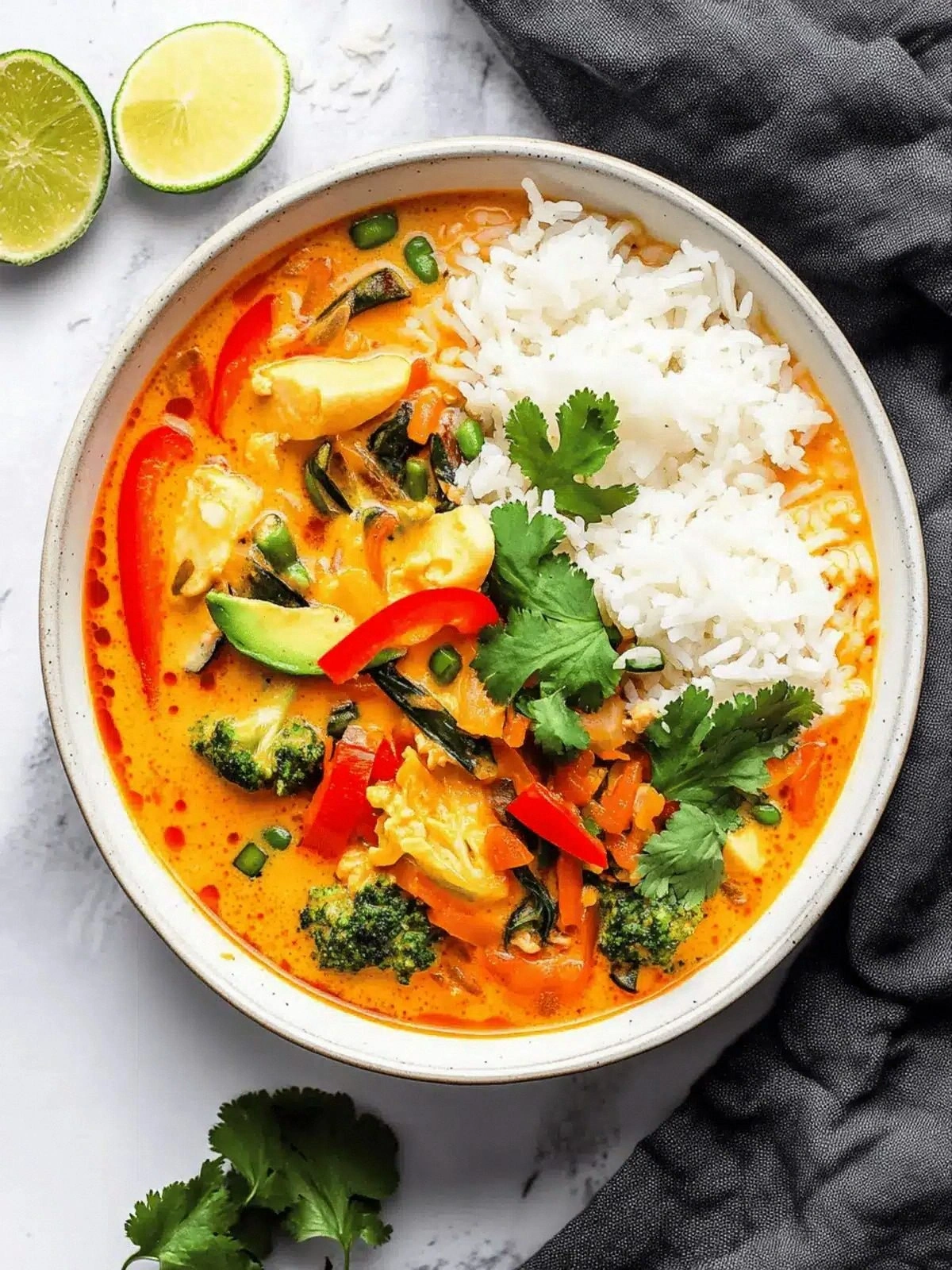
What makes this version stand out is not just the blend of colors on the plate but the harmony of flavors that unfold with each bite. The sauce is a silky, aromatic blanket that clings to every vegetable, the vegetables themselves maintain their crispness, and the coconut milk gives a creamy, slightly sweet finish that balances the heat from the curry paste. This is hands down the best version you’ll ever make at home, and I promise you, the kitchen will smell like a tropical getaway. Picture yourself pulling this out of the pot, the whole kitchen smelling incredible, and the steam rising like a fragrant cloud.
And here’s the twist that sets it apart: I use a splash of maple syrup and a squeeze of lime juice to cut through the richness and add a bright, sweet counterpoint that makes the dish sing. I also throw in kale or spinach at the end so that the greens stay bright and vibrant, not wilted. I’ll be honest— I ate half the batch before anyone else got to try it. But I’m not just sharing a recipe; I’m sharing a secret that will make you the hero of your next dinner party.
What Makes This Version Stand Out
- Taste: The combination of Thai red curry paste, coconut milk, and a touch of maple syrup creates a layered flavor profile that is both sweet and savory, with a subtle heat that lingers without overwhelming.
- Texture: Vegetables stay crisp and colorful, while the sauce coats them like velvet, creating a satisfying contrast that keeps each bite interesting.
- Simultaneous Cooking: All the veggies are sliced to the same thickness, ensuring they cook at the same rate and preventing any from becoming mushy.
- Ingredient Quality: Fresh ginger and garlic give the base depth, while fresh basil or cilantro add a fresh finish that elevates the dish.
- Make‑Ahead Potential: The curry can be prepared a day ahead, allowing the flavors to meld while the rice is still fresh, making it a perfect weeknight solution.
- Versatility: Swap out kale for spinach, or add tofu or tempeh for protein; the dish adapts to whatever you have on hand.
- Crowd Reaction: Friends and family consistently remark that it’s “the most authentic Thai curry I’ve ever had,” even though it’s made in a suburban kitchen.
- Healthful Profile: Packed with veggies, low in saturated fat, and gluten‑free, it’s a meal that satisfies both taste buds and nutritional goals.
Inside the Ingredient List
The Flavor Base
Olive Oil (1‑2 tablespoons): The foundation for sautéing, it brings a subtle fruity note that balances the heat of the curry paste. If you prefer a neutral flavor, substitute with avocado oil. Skipping this step will leave your onions and garlic tasting a bit flat.
Yellow Onion (1 small): The sweet heart of the sauce, it caramelizes slightly to add depth. A red onion could work, but it might introduce a sharper bite. If you’re in a hurry, use pre‑sliced onion to save prep time.
Garlic (4 cloves): Fresh garlic infuses the oil with a pungent aroma that anchors the dish. A pinch of salt helps release its flavor during sautéing. If you’re allergic, use garlic powder sparingly.
Fresh Ginger (1 tablespoon): Adds a bright, zesty kick that cuts through the richness of coconut milk. Grate ginger for a smoother texture or slice for a more pronounced bite. Fresh ginger is essential; ginger paste can alter the flavor profile.
The Texture Crew
Red Bell Pepper (1) & Yellow Bell Pepper (1): These bring color, crunch, and a sweet finish. If you’re not a fan of bell pepper, substitute with zucchini or snap peas. Cutting them into thin strips ensures they soften quickly without losing their snap.
Carrots (2 medium): Provide sweetness and a satisfying crunch. Baby carrots work great for a quicker cook time. Removing the tops and peeling isn’t necessary if they’re fresh.
Broccoli Florets (1 cup) & Cauliflower Florets (1 cup): These add a mild, nutty flavor that complements the curry. For a lower-carb option, replace cauliflower with bok choy. Keep florets small so they cook evenly.
Kale or Spinach (2 cups): The greens finish the dish with a pop of color and nutrition. If you prefer a milder taste, use spinach; kale adds a slightly bitter edge. Toss them in at the last minute to preserve their bright green hue.
The Unexpected Star
Thai Red Curry Paste (2.5 tablespoons): The star of the show, it delivers a complex blend of chilies, lemongrass, and spices. If you’re sensitive to heat, reduce the amount to 1 tablespoon. Freshly made paste offers a depth that store-bought can’t match.
Pure Maple Syrup (2 teaspoons): A surprising sweetener that balances the heat and richness. Substitute with agave nectar or a splash of honey (if not vegan). Too much maple syrup will overpower the dish, so keep it modest.
Low Sodium Soy Sauce (1 tablespoon): Provides umami without drowning the other flavors. Tamari or coconut aminos are great gluten‑free alternatives. A pinch of salt can be added if you prefer a saltier finish.
The Final Flourish
Coconut Milk (1 can, 15 oz): Creates a creamy, silky sauce that coats every vegetable. For a lighter version, use light coconut milk or coconut cream. If you’re avoiding dairy, this is already dairy-free, so no worries.
Water (1/2 cup): Dilutes the coconut milk to the right consistency. If the curry feels too thick, add a splash more water; if too thin, let it reduce.
Fresh Lime Juice (1 tablespoon): Adds brightness and cuts through the richness. If you prefer a citrusy tang, squeeze a fresh lime instead of bottled juice.
Sriracha Hot Sauce (to taste): For an extra kick, drizzle on the side or stir in. If you’re heat‑averse, leave it out entirely.
Fresh Chopped Basil or Cilantro (1/4 cup): A final burst of freshness that lifts the dish. Use basil for a sweeter note, cilantro for a sharper, peppery finish.
Cooked Rice (4 cups): The perfect vessel for the sauce. Jasmine or basmati rice works beautifully. If you prefer a grainless option, serve over cauliflower rice or quinoa.
Everything’s prepped? Good. Let’s get into the real action.
The Method — Step by Step
- Heat the olive oil in a large skillet or wok over medium heat. When the oil shimmers, add the diced onion, garlic, and grated ginger. Sauté for about 3 minutes until the onion becomes translucent and the aromatics release their perfume. That sizzle when it hits the pan? Absolute perfection. If the oil starts smoking, lower the heat immediately.
- Add the red and yellow bell pepper strips, carrots, broccoli, and cauliflower florets. Stir-fry for 4-5 minutes, letting the vegetables get a gentle char on the edges. The goal is to keep them bright and crisp; we’re not aiming for a soft, mushy texture. Keep the heat steady so the veggies don’t steam.
- Introduce the Thai red curry paste to the pan. Stir it into the vegetables until they’re evenly coated, and let it cook for 2 minutes. This step is the moment of truth— the paste should bloom, releasing its complex aromas. If it smells too pungent, let it cook a bit longer to mellow out.
- Pour in the coconut milk and water, then stir to combine. Bring the mixture to a gentle simmer. The sauce should thicken slightly, creating a glossy, silky coating. If the mixture starts to splatter, reduce the heat to medium‑low.
- Season with low sodium soy sauce, maple syrup, and fresh lime juice. Stir until the maple syrup dissolves and the flavors meld. The maple syrup should create a subtle sheen on the sauce, while the lime juice brightens the entire dish. Taste and adjust the seasoning; it should be a harmonious balance.
- Add the kale or spinach to the pan. Toss until the greens wilt and turn a deep emerald green. This step takes just 1-2 minutes; overcooking will make the greens mushy. The greens will absorb the sauce and add a fresh, earthy note.
- Stir in the tomatoes, letting them soften for 2 minutes. The tomatoes will release their juices, thickening the sauce slightly and adding a sweet acidity. Watch for the edges to pull away from the pan; that’s the sign that the tomatoes are ready.
- Fold in the cooked rice. Gently stir until the rice is fully coated with the sauce. The rice should soak up the flavors without breaking apart. If the mixture seems too thick, add a splash more water or coconut milk.
- Finish with a drizzle of Sriracha and a sprinkle of fresh basil or cilantro. This final touch adds heat and a burst of freshness that cuts through the richness. If you prefer less heat, keep the Sriracha on the side.
- Serve hot, garnished with extra basil or cilantro if desired. The dish should look vibrant, with the colors of the vegetables standing out against the creamy sauce. Enjoy it straight from the skillet for maximum flavor.
That’s it — you did it. But hold on, I’ve got a few more tricks that'll take this to another level. Stay with me, because the next section is packed with insider knowledge that will make you a Thai curry maestro.
Insider Tricks for Flawless Results
The Temperature Rule Nobody Follows
Many people think you can just toss everything in and let the heat do the rest. The truth is, maintaining a steady medium heat is crucial to keep the vegetables crisp and the sauce silky. If the heat is too high, the veggies will steam and lose their bite; if it’s too low, the sauce won’t thicken properly. Keep the flame steady, and use a heat‑resistant spatula to stir continuously.
Why Your Nose Knows Best
When the curry paste starts to bloom, the aroma will tell you when it’s ready. A strong, fragrant scent indicates the oils have released their essential compounds, which is the moment to add the coconut milk. Trust your nose; if it smells off, give it a minute longer to develop.
The 5‑Minute Rest That Changes Everything
After you finish cooking, let the curry rest for five minutes before serving. During this time, the flavors will meld, the sauce will thicken slightly, and the rice will absorb the remaining liquid. I’ve seen people rush to serve immediately, only to find the dish watery; a short rest fixes that.
The Secret of Fresh Herbs
Adding fresh basil or cilantro at the very end preserves their bright, citrusy notes. If you add them too early, the heat will wilt the herbs, turning them into a green mush. Toss them in just before serving for maximum flavor.
The Power of a Quick Toast
A quick toast of toasted sesame seeds or crushed peanuts right before serving adds a crunchy contrast that elevates the dish. The nutty flavor pairs beautifully with the sweet and spicy notes of the curry.
Creative Twists and Variations
This recipe is a playground. Here are some of my favorite ways to switch things up:
Protein Powerhouse
Add cubed tofu, tempeh, or chickpeas for a protein boost. The tofu should be pan‑fried until golden before adding to the curry. This keeps the texture firm and adds a subtle nutty flavor.
Spicy Kick
Increase the amount of Thai red curry paste to 4 tablespoons, or add a sliced fresh chili. This will elevate the heat level dramatically, making it a favorite for spice lovers.
Zesty Citrus Twist
Swap the lime juice for a splash of orange or grapefruit juice. The citrus will bring a sweeter, more complex acidity that pairs wonderfully with the coconut milk.
Mushroom Medley
Replace the broccoli and cauliflower with sliced shiitake or button mushrooms. The earthy flavor will complement the curry paste and add a meaty texture.
Gluten‑Free Option
Serve over quinoa or cauliflower rice instead of cooked rice. Both options keep the dish gluten‑free while adding a different grainy texture.
Sweet & Smoky
Add a teaspoon of smoked paprika or a pinch of chipotle powder to the curry paste. The smoky undertone will add depth and pair nicely with the maple syrup.
Storing and Bringing It Back to Life
Fridge Storage
Store the curry in an airtight container for up to 4 days. Keep the rice separate if you prefer to reheat it individually. When ready, stir the curry to combine any settled sauce and reheat gently over low heat.
Freezer Friendly
Freeze the curry (without rice) in freezer‑safe bags for up to 3 months. Thaw overnight in the refrigerator and reheat on the stove, adding a splash of water to restore the sauce’s silky texture.
Best Reheating Method
Reheat the curry on low heat, stirring frequently. Add a tiny splash of water or coconut milk before reheating to keep it from drying out. The result is a sauce that feels freshly made, not reheated.