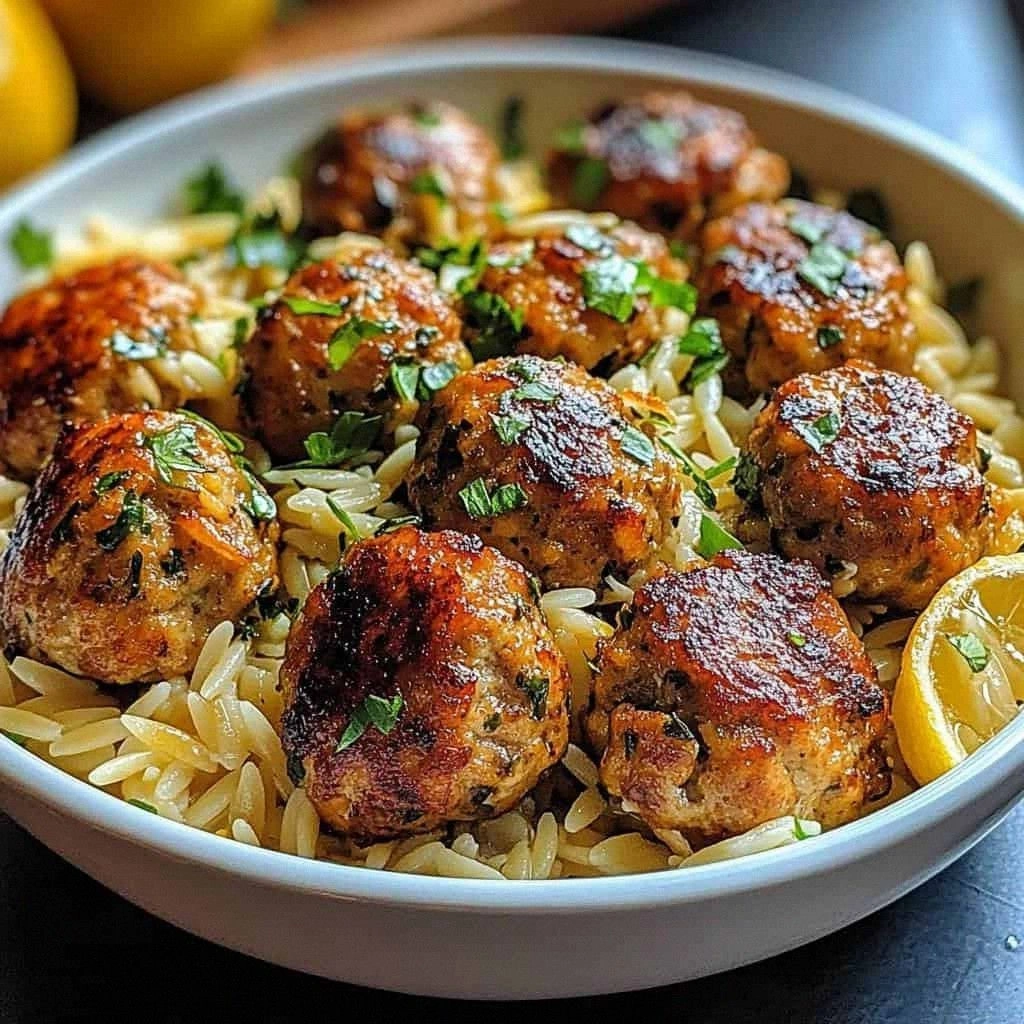
I still remember the carnage of my first attempt at Greek chicken meatballs. There I stood, covered in a paste of raw chicken and breadcrumbs, watching my miserable little orbs disintegrate into a watery tomato sauce like some tragic Mediterranean soup. My dinner guests were arriving in forty-five minutes, my kitchen smelled like a failed science experiment, and I was ready to admit defeat and order pizza forever. But something magical happened when I stopped following those bland internet recipes and started trusting my instincts instead. Fast forward through three months of obsessive testing, and I'm here to tell you that this Greek Chicken Meatballs Orzo isn't just another recipe — it's the answer to every weeknight dinner dilemma you've ever had.
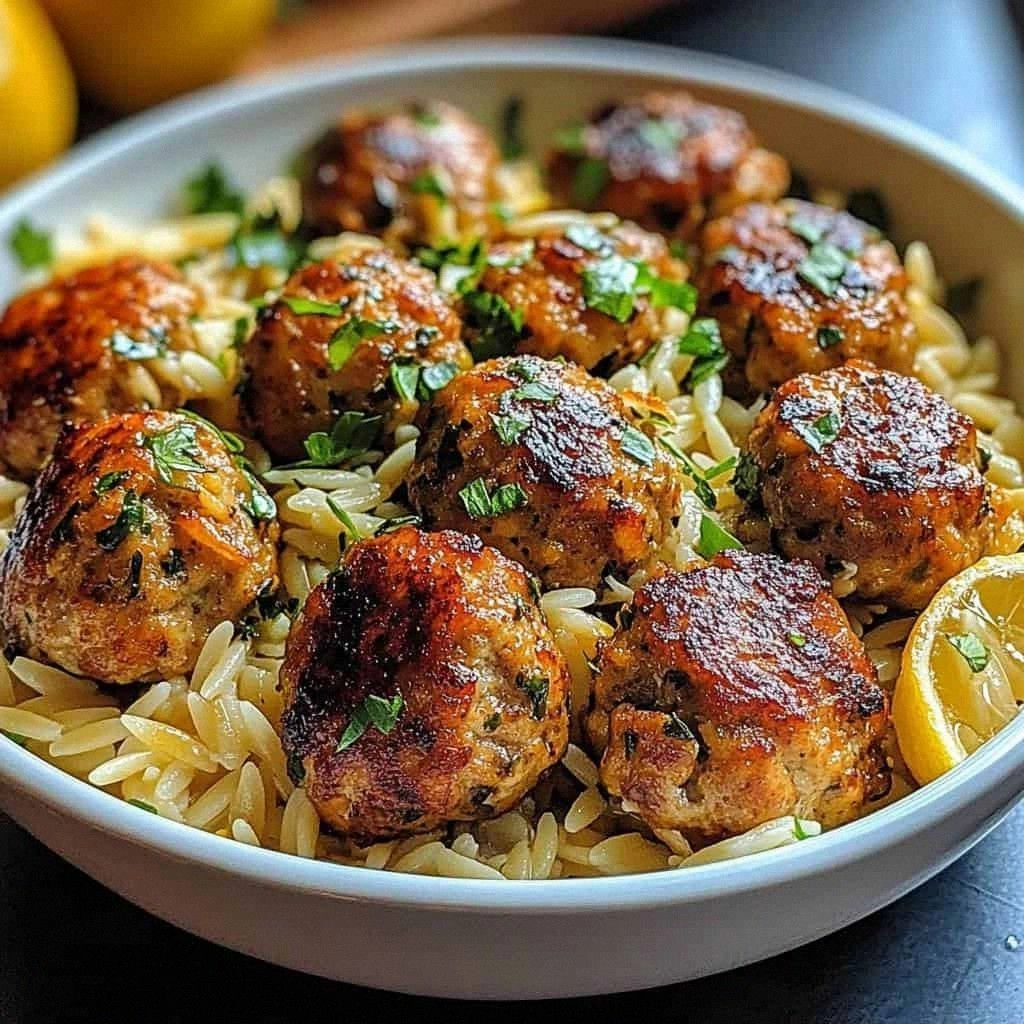
Picture this: tender chicken meatballs infused with oregano and feta, their edges caramelized to golden perfection, nestled in a bed of lemony orzo studded with sun-dried tomatoes and Kalamata olives. The whole thing comes together in one pan, which means fewer dishes and more time to actually enjoy your dinner. I dare you to taste this and not go back for seconds — I've seen grown men fight over the last meatball like it was the final slice of pizza at a college party. The best part? It's healthy enough that you won't feel guilty about that second helping, and delicious enough that you'll forget you're eating something good for you.
What makes this version different from every other Greek meatball recipe cluttering up Pinterest? I'm using a technique that keeps the chicken impossibly moist while developing those crispy edges that shatter like thin ice when you bite into them. The orzo cooks right in the same pan, absorbing all those gorgeous meatball drippings and turning into something that can only be described as edible velvet. And here's the kicker — I'm throwing in a quarter teaspoon of cinnamon, which sounds crazy until you taste how it dances with the oregano and makes the whole dish taste like something you'd discover in a tiny taverna on a Greek island.
Listen, if you've ever struggled with dry chicken meatballs or mushy orzo that tastes like kindergarten paste, you're not alone — and I've got the fix. This recipe has been tested on picky toddlers, health-obsessed gym rats, and my Greek neighbor who swears her grandmother used to make something similar. Let me walk you through every single step — by the end, you'll wonder how you ever made it any other way.
What Makes This Version Stand Out
Flavor Bomb: These meatballs aren't playing around with subtle hints of herbs — we're packing them with enough oregano, dill, and garlic to make your kitchen smell like a Greek island vacation. The secret weapon? A generous crumble of feta mixed right into the meat, creating little pockets of salty, tangy goodness that explode in your mouth with every bite.
Texture Perfection: Most chicken meatballs have the density of hockey pucks, but these stay light and tender through a combination of panko breadcrumbs and a gentle mixing technique that keeps the meat from getting tough. The result is meatballs so delicate they practically melt on your tongue, with crispy edges that provide the perfect textural contrast.
One-Pan Wonder: Everything cooks in a single skillet, which means the orzo soaks up every drop of meatball goodness while releasing its starch to create a naturally creamy sauce. No separate pots, no straining, no juggling multiple timers — just pure cooking zen that'll make you feel like a kitchen wizard.
Weeknight Friendly: From fridge to table in under 45 minutes, this dish moves faster than your delivery driver and tastes better than anything that comes in a takeout container. I've made this on Tuesday nights when I got home late from work, and it's saved me from the siren song of frozen pizza more times than I care to admit.
Make-Ahead Magic: The meatball mixture can be prepped up to two days ahead and kept in the fridge, getting even more flavorful as it sits. You can also freeze the shaped meatballs on a tray, then bag them up for instant dinners that'll make future you incredibly grateful for past you's foresight.
Crowd-Pleasing Power: I've served this to everyone from my spice-averse nephew to my foodie friends who think they've tasted everything, and every single person has asked for the recipe. It's sophisticated enough for dinner guests but familiar enough that picky eaters will clean their plates without complaint.
Alright, let's break down exactly what goes into this masterpiece...
Inside the Ingredient List
The Flavor Base
Ground chicken is the canvas we're painting on, and choosing the right kind makes all the difference between success and sadness. I always go for 1.5 pounds of ground chicken thigh rather than breast — the extra fat keeps everything moist and adds a richness that breast meat just can't deliver. If all you can find is ground chicken breast, don't panic, but do yourself a favor and add an extra tablespoon of olive oil to compensate for the leanness. The egg we're using isn't just for binding — it creates a custardy interior that keeps the meatballs impossibly tender, even if you accidentally overcook them by a minute or two.
Panko breadcrumbs are non-negotiable here — their larger, flakier texture creates air pockets that make the meatballs light instead of dense. Regular breadcrumbs work in a pinch, but they'll give you a tighter, more compact texture that's closer to meatloaf than the cloud-like meatballs we're after. The red onion brings a sweet sharpness that wakes up the chicken's mild flavor, while the fresh parsley adds a bright, almost grassy note that makes everything taste fresher and more alive.
The Greek Signature
This is where we separate the authentic from the imposters — real Greek oregano has a piney, almost camphor-like quality that supermarket oregano can only dream of achieving. If you can find Greek oregano, grab it and guard it like treasure, but regular dried oregano will still give you that Mediterranean soul. The garlic isn't shy here — two cloves might seem like a lot for a pound and a half of meat, but trust me, chicken needs the help to avoid tasting bland and boring.
The crumbled feta is where the magic really happens — as the meatballs cook, little pockets of cheese melt and create these surprise bursts of salty, tangy flavor that make people close their eyes and sigh with happiness. Don't you dare use pre-crumbled feta from a plastic container; it tastes like salty chalk. Buy a block of real feta packed in brine, crumble it yourself, and discover what feta was meant to taste like.
The Unexpected Star
Here's where I lose some people, but stay with me — a quarter teaspoon of ground cinnamon is what separates good Greek meatballs from legendary ones. This isn't enough cinnamon to make anyone think they're eating dessert, just enough to add warmth and complexity that makes people ask "what's that amazing flavor I can't quite identify?" It's a trick I learned from a Greek grandmother who swore by it, and she was absolutely right — the cinnamon enhances the oregano and makes the whole dish taste more authentically Greek.
The sun-dried tomatoes in the orzo bring concentrated umami sweetness that plays beautifully against the briny Kalamata olives. Oil-packed sun-dried tomatoes are softer and more luxurious than their dry-packed cousins, but if that's all you can find, just soak them in warm water for ten minutes to rehydrate them before chopping. The lemon juice we add at the end isn't just for brightness — its acid helps balance the richness of the feta and olive oil, tying the whole dish together like a culinary symphony conductor.
The Final Flourish
Fresh dill and parsley aren't just pretty green sprinkles — they add layers of herbaceous flavor that dried herbs can never achieve. Dill brings a slight anise note that pairs beautifully with the lemon, while parsley adds that fresh, clean taste that makes everything pop. The extra feta for garnish isn't optional in my house — those additional crumbles on top get slightly warm and creamy from the hot orzo, creating textural contrast with the chilled feta inside the meatballs.
Everything's prepped? Good. Let's get into the real action...
The Method — Step by Step
-
Start by making your meatball mixture in a large bowl, but here's the crucial part — use a fork to gently toss the ground chicken with the egg, panko, onion, parsley, garlic, feta, olive oil, oregano, dill, cinnamon, salt, and pepper. Don't go in there with your hands like you're kneading bread — treat it like you're folding clouds together. The mixture should look evenly combined but still have some texture to it; if it looks like pink baby food, you've gone too far. Cover the bowl with plastic wrap and let it rest for ten minutes while you prep everything else — this gives the breadcrumbs time to hydrate and prevents your meatballs from falling apart like mine did that first fateful night.
-
Now comes the fun part — shaping your meatballs. I use a small cookie scoop to ensure they're all the same size, which means they cook evenly and you won't end up with some raw and some hockey pucks. Roll them gently between your palms, but don't compress them too much — think of it as tucking them into bed rather than squeezing stress balls. You should get about 24 meatballs from this mixture, each about the size of a golf ball. Place them on a parchment-lined plate and admire your handiwork for a moment before we get to the sizzling action.
-
Heat a large, deep skillet over medium-high heat and add the olive oil. You want it shimmering but not smoking — test by dropping in a tiny piece of onion; it should sizzle enthusiastically. Working in batches to avoid crowding, add the meatballs and let them cook undisturbed for about 3 minutes. This is where the magic happens — those gorgeous brown crispy bottoms develop flavor that'll make you weep with joy. Don't you dare poke them or move them around; let them develop that beautiful crust that'll keep them from falling apart later.
-
After 3-4 minutes, when the bottoms are golden brown and they release easily from the pan, flip each meatball carefully using tongs. Cook the second side for another 2-3 minutes, then transfer them to a plate — they won't be fully cooked through yet, but they'll finish cooking with the orzo. This two-step cooking method ensures you get those crave-worthy crispy edges without drying out the chicken.
-
In the same pan (don't you dare wash it — all those brown bits are pure flavor gold), add the chopped red onion and cook for 2 minutes until softened and fragrant. Add the garlic and stir for just 30 seconds — you want it aromatic but not brown, or it'll taste bitter. Now pour in the orzo and stir constantly for 1 minute, coating each grain with the flavorful oil and letting it toast slightly. That toasting step is crucial — it gives the pasta a nutty depth that'll make you wonder why you've been boiling it like a caveman all these years.
-
Pour in the chicken broth and bring everything to a gentle boil, scraping up all those gorgeous browned bits from the bottom of the pan. Return the meatballs to the skillet, nestling them into the orzo like they're getting cozy for a long winter's nap. Reduce the heat to low, cover tightly, and let it simmer for 12-15 minutes. This is where the alchemy happens — the orzo releases its starch, creating a creamy sauce while absorbing all the meatball flavors.
-
After 12 minutes, lift the lid and give everything a gentle stir. The orzo should be almost tender and most of the liquid absorbed — if it's looking dry, add a splash more broth or water. Stir in the sun-dried tomatoes and Kalamata olives, then cover and cook for another 2-3 minutes until the orzo is perfectly al dente and the meatballs are cooked through. You'll know they're done when one registers 165°F on an instant-read thermometer, or when you cut one open and it's no longer pink inside.
-
Remove the pan from heat and let it rest for 5 minutes — I know you're starving, but this step is crucial for the orzo to absorb any remaining liquid and for the flavors to meld together. Stir in the lemon juice, fresh dill, and parsley, then taste and adjust seasoning with salt and pepper. The dish should taste bright and fresh, with the lemon cutting through the richness and the herbs adding pops of green flavor.
-
Serve it up in shallow bowls, making sure everyone gets their fair share of meatballs. Crumble extra feta on top, add a few dill sprigs for that restaurant presentation, and serve with lemon wedges on the side for those who like it extra bright. Don't forget the tzatziki on the table — a cool, creamy dollop takes this from delicious to absolutely transcendent. Picture yourself pulling this out of the oven, the whole kitchen smelling incredible, and watch as your family or guests immediately stop whatever they're doing and drift toward the stove like moths to a flame.
That's it — you did it. But hold on, I've got a few more tricks that'll take this to another level...
Insider Tricks for Flawless Results
The Temperature Rule Nobody Follows
Here's the thing that separates restaurant-quality meatballs from home cook disasters — temperature control. Your pan needs to be hot enough to create that beautiful sear, but not so hot that the outside burns before the inside cooks through. Medium-high heat is your sweet spot, and if you're unsure, err on the side of slightly lower heat. You can always turn it up, but you can't un-burn garlic or rescue dried-out chicken. A friend tried rushing this step once — let's just say it didn't end well for anyone involved, especially not her dinner guests who had to pretend they enjoyed carbonized meatballs.
The same rule applies when you're cooking the orzo — once you add the broth and cover the pan, resist the urge to crank up the heat to speed things along. Gentle, even heat allows the pasta to absorb liquid gradually, creating that creamy texture we're after. High heat will cause the bottom to scorch while the top stays crunchy, giving you a texture nightmare that no amount of stirring can fix.
Why Your Nose Knows Best
I'll be honest — I ate half the batch before anyone else got to try it, and my secret weapon was trusting my nose throughout the entire cooking process. When the onions hit the pan, they should smell sweet and aromatic, not sharp and acrid. If your nose detects bitterness, your heat is too high. When the garlic goes in, it should perfume your kitchen with savory warmth within 30 seconds — if it starts smelling harsh or brown, you've gone too far and need to move fast.
The same sensory awareness applies to knowing when your meatballs are perfectly cooked. They'll start releasing a rich, meaty aroma that mingles with the herbs and fills your kitchen with promises of delicious things to come. That smell when it hits the pan? Absolute perfection. Trust your instincts — when it smells like something you want to dive into face-first, you're probably on the right track.
The 5-Minute Rest That Changes Everything
Most recipes get this completely wrong. Here's what actually works: after you remove the pan from heat, let everything rest for at least 5 minutes before serving. During this time, the orzo continues to absorb any remaining liquid, the flavors meld together like old friends reuniting, and the meatballs relax and become even more tender. This isn't just culinary mumbo-jumbo — it's science in action.
Use this time to set the table, pour yourself a glass of wine, or just bask in the glory of what you've created. The dish will transform from good to absolutely spectacular during this brief pause, and you'll understand why patience is a virtue in the kitchen. Plus, it gives you a moment to appreciate that sizzle when it hits the pan — one of life's simple pleasures that never gets old.
Creative Twists and Variations
This recipe is a playground. Here are some of my favorite ways to switch things up:
Mediterranean Lamb Edition
Swap the ground chicken for ground lamb and add a teaspoon of ground coriander and a pinch of allspice to the meatball mixture. The lamb's natural richness pairs beautifully with the herbs, and the slightly gamey flavor stands up to all those bold Greek seasonings. Use beef broth instead of chicken broth for the orzo, and add a handful of pine nuts along with the sun-dried tomatoes for extra Mediterranean authenticity.
Spicy Spanish Remix
Replace the oregano with smoked paprika, swap the feta for manchego cheese, and add a diced roasted red pepper to the orzo. Throw in some chopped chorizo with the onions for extra Spanish flair, and finish with a sprinkle of fresh parsley instead of dill. The result is a completely different dish that still maintains the same one-pan convenience but transports your taste buds from Greece to Spain in the best possible way.
Vegetarian Power Version
Use crumbled firm tofu mixed with a tablespoon of white miso paste instead of chicken, and add a cup of cooked chickpeas to the orzo for protein. The miso provides that umami depth that meat usually brings, while the chickpeas add satisfying texture. Increase the feta to half a cup in the "meatballs" for extra richness, and add some chopped spinach to the orzo for color and nutrition.
Low-Carb Cauliflower Creation
Replace the orzo with cauliflower rice, reduce the broth to one cup, and add it gradually as the cauliflower releases its moisture. The cooking time drops to about 8 minutes total, making this a lightning-fast weeknight option. The cauliflower rice absorbs all those amazing meatball flavors while keeping things light and low-carb — perfect for those nights when you want comfort food without the food coma.
Creamy Tuscan Dream
Add a splash of white wine after cooking the onions, let it reduce by half, then stir in a quarter cup of heavy cream along with the broth. The result is a luxurious, creamy sauce that coats the orzo like velvet, transforming the dish into something worthy of a special occasion. Add some baby spinach at the end for color and a nutritional boost.
Seafood Celebration
Replace the chicken with a pound of shrimp (peeled and deveined) and cook them for just 2-3 minutes until pink and curled. The shrimp's natural sweetness pairs beautifully with the lemon and herbs, and they cook so quickly that this becomes a 20-minute meal from start to finish. Add some chopped fresh oregano on top for an extra burst of Mediterranean flavor.
Storing and Bringing It Back to Life
Fridge Storage
This dish stores beautifully in the refrigerator for up to 4 days, making it perfect for meal prep Sunday that'll carry you through Thursday. Let everything cool completely before transferring to airtight containers — I like to store the meatballs and orzo together because they actually taste better as the flavors meld. The key is to add a tiny splash of water before reheating — it steams back to perfection, recreating that just-cooked creaminess instead of the dried-out mess that usually happens with leftover pasta.
When storing, press a piece of plastic wrap directly against the surface of the orzo to prevent it from drying out and developing that unpleasant crust. If you're planning to eat it within a day or two, you can skip this step, but for longer storage, it's a game-changer that keeps everything tasting fresh and delicious.
Freezer Friendly
Here's where this recipe really shines — both the cooked dish and the raw meatball mixture freeze beautifully. For the raw mixture, shape the meatballs, arrange them on a parchment-lined tray, and freeze until solid before transferring to a freezer bag. They'll keep for up to 3 months and can go straight from freezer to pan, just add a few extra minutes to the cooking time. The cooked dish can be frozen in individual portions for up to 2 months, though the orzo texture changes slightly upon thawing — still delicious, just a bit softer.
When freezing the complete dish, undercook the orzo slightly (about 2 minutes less than the recipe calls for) so it doesn't turn to mush when you reheat it later. Freeze in flat, stackable containers for maximum freezer efficiency, and don't forget to label with the date — future you will appreciate not playing the "what is this and when did I make it" game.
Best Reheating Method
The microwave works in a pinch, but for best results, reheat in a covered skillet over medium-low heat with a splash of broth or water. Stir gently every couple of minutes until everything is heated through and the sauce has re-emulsified. This method takes about 8-10 minutes but restores the dish to its former glory in a way that the microwave simply can't match. If you're reheating from frozen, let it thaw in the refrigerator overnight first for best results.
For individual portions, I've been known to add a fresh handful of herbs and a squeeze of lemon right before serving — it brightens everything up and makes yesterday's dinner taste like you just made it fresh. Pro tip: if the orzo seems dry after reheating, stir in a tiny pat of butter or drizzle of olive oil to bring back that luscious texture.