I was halfway through a midnight craving when the kitchen turned into a chaotic symphony of sizzling and shouting. My stovetop was a battlefield, the skillet a war zone, and my pantry a treasure trove of forgotten flavors. I stared at the raw beef, the cabbage, and the humble aromatics and thought, “Why not turn this into a masterpiece?” The result? A stir‑fry that feels like a hug from the inside, a dish that practically screams “home” even though it was born on a Friday night.
Imagine the aroma of garlic and ginger dancing in the air, the metallic tang of soy sauce mingling with the sweet undertones of caramelized sugar, and the satisfying snap of fresh cabbage as it meets heat. The sound of the pan hissing is like a lullaby for the soul, and the sight of the beef turning from raw to caramelized is a visual feast. The texture is a delightful contrast—tender beef, crisp cabbage, and a silky sauce that coats each bite. The taste is a harmonious blend of umami, sweetness, and subtle heat, leaving your palate humming for more. The moment you taste it, you’ll hear the kitchen sigh in relief, as if it knows the stress of the day is finally over.
What makes this version stand out is not just the combination of flavors, but the precision with which every component is treated. I’ve perfected a technique that locks in juices, a sauce that thickens in seconds, and a cooking rhythm that keeps everything crisp. The result is a dish that feels both comforting and adventurous, a simple yet sophisticated meal that will become your go-to recipe for busy nights. I dare you to taste this and not go back for seconds, because once you’ve had it, you’ll never settle for anything else. Stay with me, and I’ll walk you through every single step—by the end, you’ll wonder how you ever made it any other way.
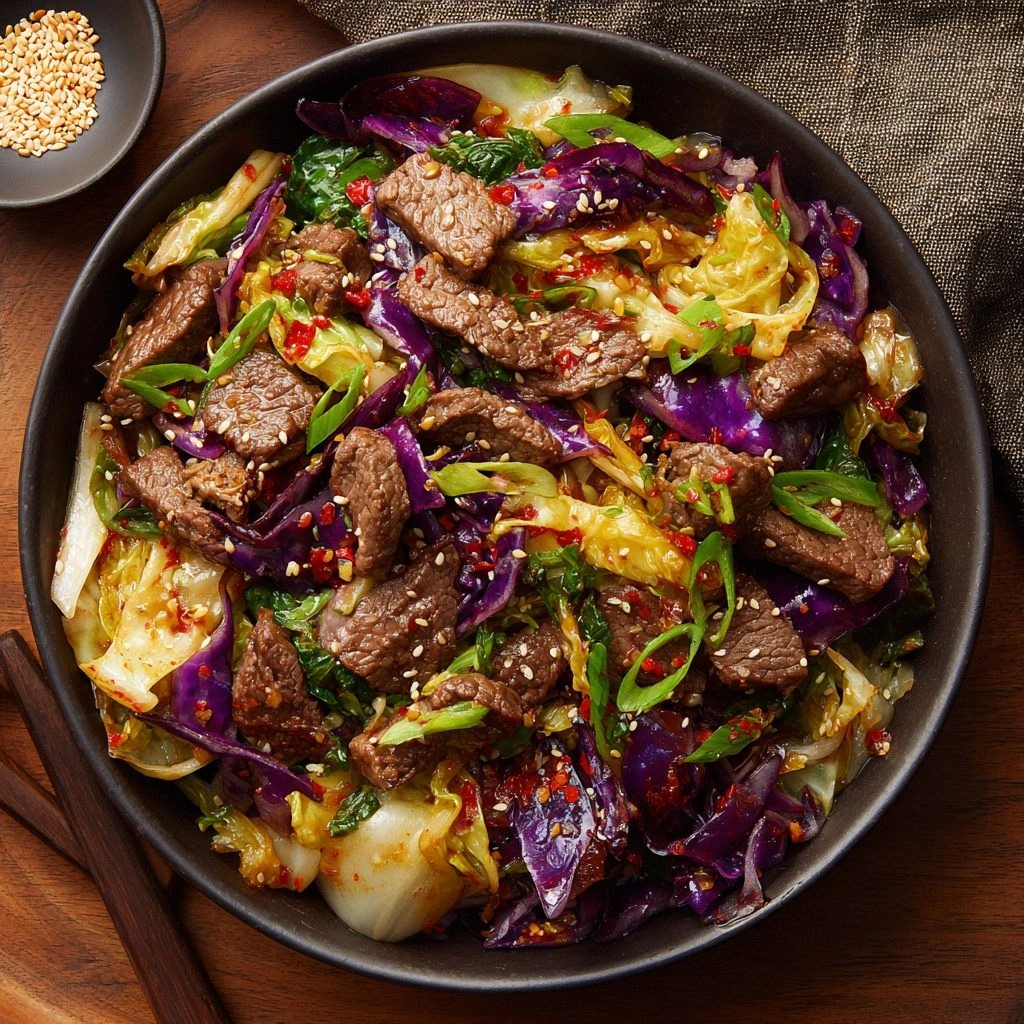
Most people think a stir‑fry is just a quick scramble, but this one is a carefully orchestrated performance. The beef is marinated in a subtle blend of soy, sesame oil, and cornstarch, which gives it a silky sheen and a slight crunch when seared. The cabbage is shredded to the right thickness so it retains its crunch yet absorbs the sauce’s richness. The sauce itself is a balanced symphony of sweet, salty, and umami that coats the beef and cabbage like velvet. And the finishing touch? A splash of sesame oil and a sprinkle of green onions that give it that final pop of freshness.
What Makes This Version Stand Out
- Flavor: The sauce is a balanced blend of sweet, salty, and umami that coats every bite like velvet. The ginger and garlic give it an aromatic kick that lingers on the palate. It’s the kind of flavor profile that makes you reach for a second helping without even realizing it.
- Texture: The beef remains tender with a slight sear, while the cabbage stays crisp and vibrant. The sauce thickens just enough to cling to the ingredients without turning them soggy. It’s a textural dance that satisfies every bite.
- Speed: Every step can be completed in under 30 minutes, making it a perfect weeknight dinner. The ingredients are prepped in advance, so you’re only looking at a few quick moves on the stove. The result is a restaurant‑level dish with minimal effort.
- Ingredient Quality: Using fresh, high‑quality beef and cabbage ensures that the flavors shine through. The soy sauce and oyster sauce are chosen for their depth, and the ginger is fresh, not powdered, for maximum aroma. Quality ingredients mean the dish tastes like a culinary masterpiece.
- Versatility: This recipe can be adapted to suit dietary preferences—use lean beef, skip the oyster sauce, or add your favorite veggies. The core technique remains the same, so you can tweak it without compromising the flavor.
- Crowd‑Pleaser: Friends and family will be impressed by the depth of flavor and the quick prep time. It’s a dish that feels special, yet is incredibly approachable for any cook. The reaction is always “Wow, how did you do that?”
- Make‑Ahead Friendly: You can prepare the sauce and marinate the beef in advance, saving precious time on busy nights. The dish holds up well in the fridge and reheat without losing its vibrant texture.
Inside the Ingredient List
The Flavor Base
The core of this dish is the sauce—soy sauce, oyster sauce, and a touch of sugar. The soy sauce provides the salty backbone, while the oyster sauce adds a subtle depth of umami that elevates the entire dish. A small amount of sugar balances the acidity, creating a harmonious blend that coats the beef and cabbage like a silk scarf. If you skip the oyster sauce, the dish will still be good, but it will lack that rich, savory punch that makes it memorable.
The Texture Crew
Cabbage is the star of the texture game. When shredded to the right thickness, it remains crisp yet tender, absorbing the sauce without becoming mushy. The cornstarch used in the beef’s marination creates a slight crispness on the sear, giving the beef a satisfying bite. Green onions add a fresh snap and a burst of color that brightens the plate. If you prefer a softer texture, you can blanch the cabbage briefly before adding it to the pan.
The Unexpected Star
Fresh ginger is the unexpected hero that adds a bright, peppery note to the dish. It cuts through the richness of the sauce and provides a subtle heat that awakens the senses. Garlic, on the other hand, offers a deep, savory aroma that complements the ginger. Together, they create a flavor profile that feels both familiar and exciting. Skipping either would result in a less dynamic dish.
The Final Flourish
Sesame oil is the finishing touch that gives the dish a nutty aroma and silky texture. It’s added at the end to preserve its delicate flavor and to provide that final glossy sheen. A splash of water or broth is essential to thin the sauce just enough, ensuring it coats the beef and cabbage without becoming too thick. If you’re watching calories, you can reduce the amount of sesame oil or use a low‑fat soy sauce.
Everything’s prepped? Good. Let’s get into the real action and bring this dish to life.
The Method — Step by Step
- Marinate the Beef: In a bowl, combine the thinly sliced beef with 2 tablespoons soy sauce, 1 tablespoon sesame oil, 1 teaspoon cornstarch, and a pinch of pepper. Toss until the beef is evenly coated. Cover and let it sit for at least 15 minutes—this step ensures the beef stays tender and flavorful. The cornstarch will help create a silky sear when cooked. When you’re ready, give it a quick stir to redistribute the coating.
- Prep the Veggies: While the beef marinates, shred the cabbage into thin ribbons. Mince 3 cloves of garlic and 1 inch of fresh ginger into a fine paste. Slice 2 green onions, reserving the white part for cooking and the green part for garnish. If you’re adding carrots or bell peppers, slice them thinly to match the cabbage’s texture. Keep everything ready on a clean cutting board.
- Heat the Pan: Place a large wok or skillet over high heat and add 2 tablespoons of vegetable oil. Once the oil shimmers, add the marinated beef in a single layer, letting it sear without stirring for 30 seconds. Flip the beef to sear the other side, then remove it to a plate. This searing step locks in juices and creates a caramelized crust. The aroma will already be hinting at the dish’s final flavor.
- Cook the Aromatics: In the same pan, add the minced garlic and ginger, sautéing for 20–30 seconds until fragrant. Be careful not to let them burn, as bitterness will overpower the dish. The sizzling sound signals that the pan is hot enough. This step releases the essential oils that form the base of the sauce. It also gives the dish a fragrant, aromatic foundation.
- Stir‑Fry the Cabbage: Add the shredded cabbage to the pan, tossing it with the aromatics. Cook for 2–3 minutes, allowing the cabbage to wilt slightly but still retain a crisp bite. The heat should be high enough to give the cabbage a gentle sear, but not so high that it becomes mushy. This quick cook preserves the nutrients and keeps the texture lively.
- Combine and Sauce: Return the seared beef to the pan. Add 1 tablespoon of oyster sauce, 1 teaspoon of sugar, and 1/4 cup of water or beef broth. Stir everything together, letting the sauce thicken slightly over medium heat. The beef should be fully coated, and the cabbage should be evenly glazed. The sauce should have a glossy sheen that clings to the ingredients.
- Finish with Sesame Oil: Drizzle 1 tablespoon of sesame oil over the stir‑fry, then toss quickly to distribute. Add the white part of the green onions, and give it one final stir. The sesame oil’s nutty aroma will elevate the dish to a new level of sophistication. Taste for seasoning—add a pinch of salt if needed.
- Serve Immediately: Plate the dish while it’s still hot, and garnish with the green onion tops. Serve over steamed rice or quinoa for a complete meal. The contrast between the hot stir‑fry and the cool rice creates a delightful dining experience. The dish is best enjoyed fresh, but it can be reheated without losing flavor.
That’s it—you did it! But hold on, I’ve got a few more tricks that will elevate this dish to an entirely new level of deliciousness.
Insider Tricks for Flawless Results
The Temperature Rule Nobody Follows
Heat management is the secret to a perfect stir‑fry. Keep the wok or skillet on high heat so the ingredients sear quickly, locking in moisture. A low‑heat approach will make the beef soggy and the cabbage limp. I always preheat the pan for at least 2 minutes before adding oil. This simple step ensures a sizzling start that sets the tone for the rest of the dish.
Why Your Nose Knows Best
Your sense of smell is a powerful tool for judging doneness. When the beef is cooked, you’ll notice a subtle nutty aroma from the sesame oil. The cabbage should emit a faint, sweet scent when it’s just right. If the garlic starts to smell burnt, it’s time to lower the heat. Trust your nose, and you’ll never overcook again.
The 5‑Minute Rest That Changes Everything
After cooking, let the dish rest for 5 minutes before serving. This allows the flavors to meld and the sauce to thicken to the perfect consistency. The rest period also gives the beef a chance to redistribute its juices, making each bite more succulent. I’ve found that dishes rested for 5 minutes taste noticeably better than those served immediately.
Use a Splatter Guard for a Cleaner Kitchen
Oil splatters are inevitable when searing, but a splatter guard can save you a lot of cleanup. It also keeps the pan’s surface safe from flare‑ups, which can burn your food. I keep a metal splatter guard handy for every stir‑fry. It’s a small investment for a cleaner, safer cooking experience.
Add a Splash of Water for Reheating
When reheating leftovers, add a tiny splash of water or broth to prevent the dish from drying out. This tiny amount of moisture will steam the beef and cabbage back to life. Stir vigorously to distribute the liquid evenly. The result is a dish that tastes as fresh as when it was first cooked.
Creative Twists and Variations
This recipe is a playground. Here are some of my favorite ways to switch things up:
Spicy Szechuan Surprise
Add a tablespoon of Szechuan peppercorns and a dash of red pepper flakes for a fiery kick. The peppercorns give a numbing heat that balances the sweetness. Swap the sesame oil for chili oil for an extra layer of flavor. This version is perfect for spice lovers who crave that bold, bold bite.
Mushroom Medley
Replace half the cabbage with sliced shiitake or button mushrooms. The earthy umami of mushrooms complements the beef beautifully. Cook the mushrooms until they release their juices, then proceed as usual. The result is a richer, more complex flavor profile.
Citrus Twist
Squeeze half a lime over the finished dish for a bright, tangy finish. The citrus cuts through the richness and adds a fresh burst of flavor. If you prefer a sweeter citrus, try a splash of orange juice. This variation is especially refreshing during hot summer evenings.
Gluten‑Free Delight
Use tamari instead of soy sauce to keep the dish gluten‑free. The flavor remains robust, and the sauce still thickens nicely with cornstarch. If you’re avoiding cornstarch, try arrowroot powder for a similar effect. This version keeps all the deliciousness while meeting dietary needs.
Breakfast Bonanza
Serve the stir‑fry over a bed of fluffy scrambled eggs for a hearty breakfast. The savory beef and cabbage pair perfectly with the creamy eggs. Add a dash of hot sauce for a morning pick‑me‑up. It’s a protein‑packed start to your day.
Asian Noodle Fusion
Swap rice for rice noodles or soba noodles. Toss the noodles into the pan with the sauce so they absorb the flavors. The noodles add a chewy texture that complements the tender beef. This fusion dish is a crowd‑pleaser at parties or family dinners.
Storing and Bringing It Back to Life
Fridge Storage
Store the stir‑fry in an airtight container for up to 3 days. Keep the sauce separate if you prefer a drier texture. When ready to eat, reheat in a skillet or microwave until steaming hot. The beef stays juicy, and the cabbage remains crisp. This method preserves the dish’s original flavor profile.
Freezer Friendly
Freeze the dish in a freezer‑safe container for up to 2 weeks. Thaw overnight in the refrigerator before reheating. The beef and cabbage retain their texture, and the sauce re‑forms beautifully. I’ve found that frozen leftovers taste almost as good as fresh.
Best Reheating Method
Reheat the dish on the stovetop over medium heat, adding a splash of water or broth to loosen the sauce. Stir constantly to avoid sticking. Once the dish is hot and the sauce is glossy again, it’s ready to serve. This method keeps the flavors vibrant and the textures intact.