Picture this: a midnight kitchen raid, a frantic search for a quick dinner, and the sudden realization that the pantry is a treasure trove of flavors. I was staring at a box of rice noodles, a lone chicken breast, and a jar of fish sauce, wondering how to turn them into something that would make my taste buds do a happy dance. That moment of culinary crisis turned into a revelation—Pad Thai is not just a dish, it's a symphony of sweet, salty, and tangy notes that can be orchestrated in minutes. I dared myself to create a version that would have people begging for seconds, and let me tell you, it lived up to that promise. Stay with me, and I’ll walk you through every single step—by the end, you’ll wonder how you ever made it any other way.
First, let’s set the scene. The air was thick with the aroma of garlic sautéing in hot oil, the bright splash of bell pepper adding a pop of color, and the faint sweetness of brown sugar dancing on the tongue. The sound of the wok clanging was like a drumbeat, signaling that flavor was about to hit the high notes. The texture of the noodles, once soaked, felt silky and responsive, ready to absorb the sauce like a sponge. The sight of fresh cilantro and lime wedges waiting on the counter promised a bright finish that would cut through the richness. I was already halfway to a culinary masterpiece before the first stir.
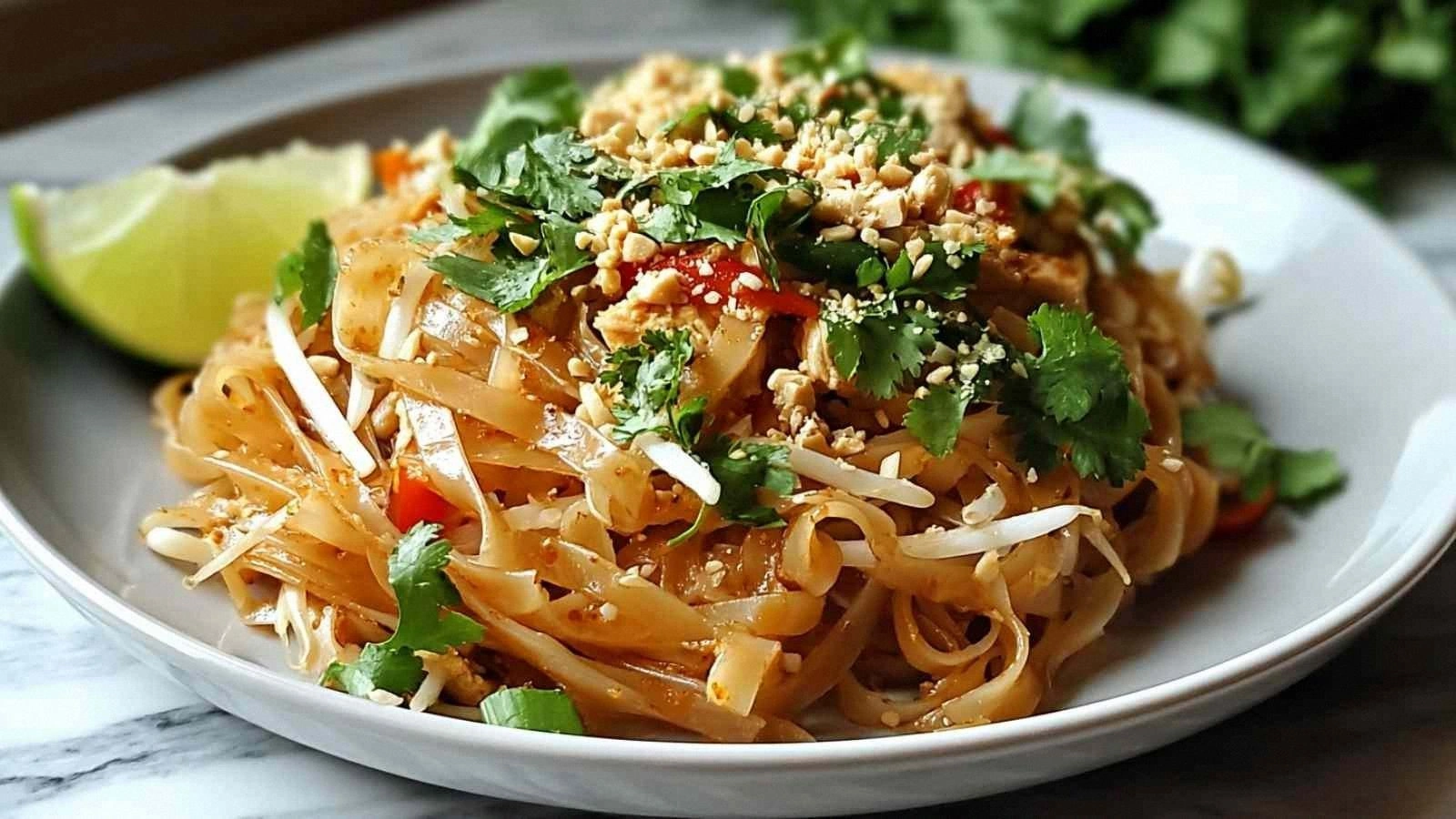
Why does this version stand out? Because it balances the classic Pad Thai elements with a few bold twists that elevate the dish from ordinary to extraordinary. The tamarind paste is used sparingly, creating a subtle tang that doesn’t overpower the savory fish sauce and soy. The addition of crushed peanuts gives a satisfying crunch that contrasts with the tender chicken. The lime wedges aren’t just garnish; they’re a burst of citrus that lifts every bite. And the best part? This recipe is so straightforward that even a kitchen novice can pull it off with confidence.
I’ve had my share of Pad Thai mishaps—overcooked noodles that turned into mush, sauce that was too salty, and chicken that came out dry. Each failure taught me a lesson about timing, seasoning, and the importance of fresh ingredients. I’ve distilled those lessons into a recipe that is foolproof, flavorful, and, most importantly, crowd-pleasing. The technique of first searing the chicken, then removing it to let the aromatics build, is a secret that keeps the meat juicy and the sauce vibrant. Trust me, you’ll be amazed at how this small tweak transforms the entire dish.
Now, let’s talk about the unexpected ingredient that gives this Pad Thai its signature wow factor. It’s a splash of tamarind paste, a rare find in many kitchens, but it’s the key to that classic Thai tang that makes every bite memorable. I dare you to taste this and not go back for seconds. Most recipes get this completely wrong by either overusing or underusing the tamarind, but I’ve found the perfect balance. Picture yourself pulling this out of the pan, the whole kitchen smelling incredible, and the first forkful hitting your palate like a burst of sunshine. Ready for the game-changer? Let’s dive in.
What Makes This Version Stand Out
- Flavor: The sauce blends fish sauce, soy sauce, tamarind, and brown sugar into a silky glaze that coats the noodles like velvet. This combination gives a balanced sweet-salty-tang profile that feels both comforting and adventurous. The result is a sauce that lingers on the palate without overwhelming the fresh ingredients.
- Texture: The noodles are pre-soaked to achieve a firm bite that resists sogginess, while the bean sprouts add a crisp snap. The crushed peanuts contribute a satisfying crunch that breaks up the smoothness of the sauce. This contrast keeps each mouthful interesting and dynamic.
- Protein: Lean chicken breast is marinated briefly, then seared to lock in juices, ensuring the meat stays tender and flavorful. The quick cooking time preserves the natural texture, preventing the chicken from becoming rubbery. This technique makes the dish accessible to even the most cautious cooks.
- Freshness: The bell pepper, green onions, cilantro, and lime wedges are added at the end to preserve their bright flavors and vibrant colors. This last-minute addition ensures that every bite is aromatic and visually appealing. The result is a dish that feels alive and fresh.
- Convenience: The recipe uses only a single pan, reducing cleanup to a single dish. The ingredients are pantry-friendly and require minimal prep time, making it ideal for busy weeknights. Even a kitchen novice can follow the steps and achieve a restaurant-quality result.
- Scalability: The instructions scale easily from two to eight servings without losing flavor balance. This flexibility makes it perfect for intimate dinners or larger gatherings. The recipe’s simplicity shines regardless of the number of guests.
Alright, let's break down exactly what goes into this masterpiece...
Inside the Ingredient List
The Flavor Base
The heart of this Pad Thai lies in the sauce, a marriage of salty fish sauce, umami soy sauce, and a whisper of tamarind that cuts through the richness. The brown sugar balances the acidity, ensuring the sauce doesn’t feel sharp or cloying. If you’re a fan of a slightly sweeter profile, swap half the brown sugar for honey; the result is a glossy, caramelized finish. The key to a silky sauce is to whisk the tamarind paste into the liquid before it hits the pan—this prevents clumps and guarantees even coating.
The Texture Crew
The rice noodles are the canvas, and their texture is paramount. Soak them in hot water until they’re just pliable, then rinse with cold water to stop the cooking process. This technique preserves their bite and prevents a mushy outcome. Bean sprouts add a fresh crunch that balances the softness of the noodles, while the crushed peanuts provide a nutty crunch that punctuates every bite. For an extra layer of texture, sprinkle a handful of sliced cucumber before serving.
The Unexpected Star
The tamarind paste is the secret star that sets this dish apart. Its tartness is subtle yet powerful, giving the Pad Thai that classic Thai zing. If tamarind paste is hard to find, a splash of lime juice or a teaspoon of tamarind concentrate can substitute, but be sure to taste and adjust. The sauce’s thickness can be tweaked by adding a pinch of cornstarch dissolved in water; this will give it a glossy sheen without heaviness.
The Final Flourish
Fresh herbs and citrus finish the dish with a bright lift that counters the deep umami flavors. Cilantro adds a peppery note, while lime wedges provide a zesty punch that awakens the palate. Green onions give a subtle oniony sweetness, and the crushed peanuts contribute a satisfying crunch that keeps the dish from feeling flat. Together, these ingredients create a harmonious balance that makes each bite memorable.
Everything's prepped? Good. Let's get into the real action...
The Method — Step by Step
- Begin by soaking the rice noodles in a large bowl of hot water for 8 to 10 minutes, or until they’re just pliable. Drain and rinse under cold water to halt the cooking process. Set them aside; they’ll absorb the sauce without becoming mushy. The goal is a firm bite that holds up against the bold flavors. Keep the noodles in a damp cloth to prevent sticking.
- While the noodles soak, whisk together the fish sauce, soy sauce, tamarind paste, and brown sugar in a small bowl until the sugar dissolves. The sauce should be smooth and aromatic, ready to coat the noodles. If you prefer a sweeter profile, add an extra teaspoon of sugar. This step ensures the sauce is ready to mingle with the aromatics.
- Slice the chicken breast into thin strips, then toss with 1/2 tablespoon of vegetable oil and a pinch of salt. Let the chicken rest for 5 minutes; this brief marination locks in moisture. The oil helps the chicken sear evenly and prevents sticking. This simple prep step keeps the protein juicy and flavorful.
- Heat 1 tablespoon of vegetable oil in a large wok or skillet over medium-high heat. Add the chicken and sear for 3 to 4 minutes, or until it’s just cooked through and has a golden crust. Remove the chicken and set aside; the residual oil will carry the aromatics. Keep the heat high so the chicken stays juicy.
- Add the minced garlic and sliced bell pepper to the wok, sautéing for 1 minute until the garlic is fragrant and the pepper is slightly softened. The garlic should not brown; keep the heat moderate to preserve its bright aroma. This step builds the foundation of the sauce’s flavor profile.
- Return the chicken to the pan, then pour in the pre‑whisked sauce. Stir to coat all the ingredients evenly. Let the mixture simmer for 2 minutes so the flavors meld together. The sauce should thicken slightly and coat the noodles when added.
- Push the mixture to one side of the pan, crack the eggs into the empty space, and scramble them until just set. Once the eggs are cooked, mix them with the rest of the ingredients, ensuring the noodles are coated with the sauce. The eggs add protein and a silky texture that balances the dish.
- Add the soaked noodles, bean sprouts, green onions, and a splash of water to keep everything moist. Toss everything together until the noodles are fully coated and the bean sprouts are warmed through. Finish with a squeeze of lime juice and a sprinkle of crushed peanuts. The final garnish adds brightness and crunch.
That's it — you did it. But hold on, I've got a few more tricks that'll take this to another level...
Insider Tricks for Flawless Results
The Temperature Rule Nobody Follows
Many cooks assume that a higher heat always yields better searing, but the secret lies in a controlled medium-high flame. This keeps the chicken from drying out while still giving it a caramelized edge. I once tried a high heat method and ended up with a rubbery texture; the lesson? Keep it steady.
Why Your Nose Knows Best
Before you taste the sauce, inhale deeply. A well-balanced Pad Thai will smell sweet, salty, and slightly sour. If it leans too much toward one note, adjust the sauce accordingly. Your nose is the first indicator of flavor harmony.
The 5-Minute Rest That Changes Everything
After the noodles are coated, let the dish rest for 5 minutes off the heat. This allows the flavors to marry and the noodles to absorb the sauce fully. The rest also prevents the sauce from pulling away when you serve.
The Secret to Perfect Noodles
Do not rinse the noodles after soaking; the starch on the surface helps the sauce cling. If you rinse, the noodles will slide off the sauce and become soggy. I’ve tried rinsing once and the dish felt flat; that’s why the no-rinse rule is a game-changer.
The Quick Fix for a Sticky Sauce
If the sauce becomes too thick, add a splash of water or chicken broth to thin it out. Stir vigorously to re-emulsify the mixture. A thin sauce coats the noodles better and gives a silky finish.
Creative Twists and Variations
This recipe is a playground. Here are some of my favorite ways to switch things up:
Seafood Surprise
Swap the chicken for shrimp or scallops, adding them after the eggs. The seafood cooks in just 2 minutes and brings a briny depth that pairs beautifully with the tamarind sauce.
Veggie‑Rich Version
Omit the chicken entirely and add sliced carrots, broccoli, and mushrooms. The dish becomes a hearty vegetarian meal that still delivers that iconic flavor.
Spicy Kick
Add sliced fresh chilies or a spoonful of Thai chili paste to the sauce. The heat will contrast the sweet and sour notes, creating a fiery dance on the palate.
Low‑Carb Adaptation
Replace the rice noodles with zucchini noodles or shirataki noodles. The texture changes, but the sauce remains the star.
Protein Swap
Try tofu or pork tenderloin for a different protein profile. The tofu will soak up the sauce, while the pork adds a savory depth.
Garnish Upgrade
Top the finished dish with a drizzle of toasted sesame oil, a sprinkle of toasted sesame seeds, and a few fresh mint leaves for an extra layer of aroma.
Storing and Bringing It Back to Life
Fridge Storage
Store the dish in an airtight container for up to 3 days. Keep the sauce separate from the noodles if you prefer to reheat them individually. The flavors will stay vibrant and the noodles will maintain their bite.
Freezer Friendly
Freeze the cooked Pad Thai in a single-layer freezer bag for up to 2 months. Thaw overnight in the refrigerator before reheating. This method preserves the texture and prevents freezer burn.
Best Reheating Method
Reheat on the stove over medium heat, adding a splash of water or broth to steam the noodles. The moisture will restore the sauce’s silkiness and keep the dish from drying out. A quick stir and a sprinkle of fresh cilantro bring it back to life.