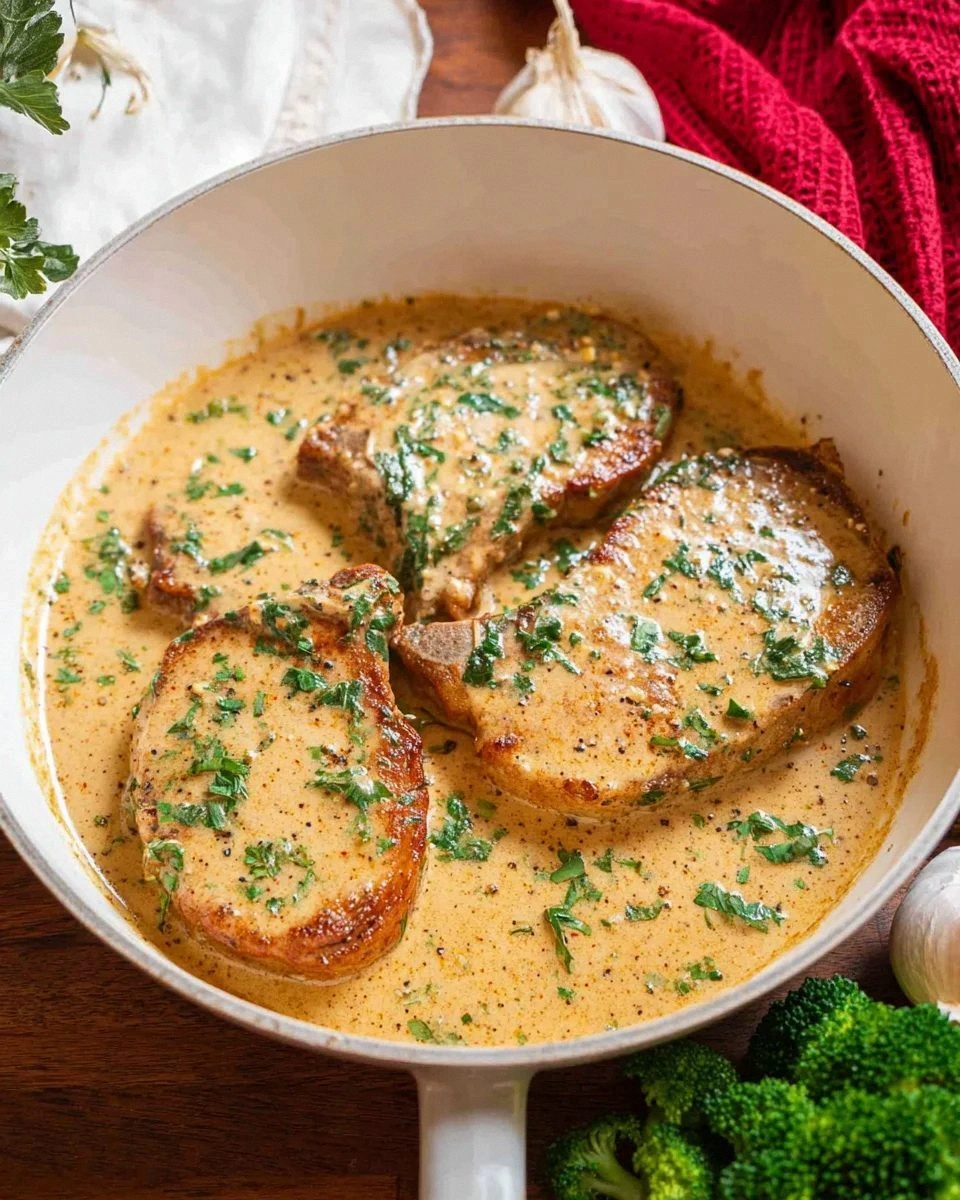
I still remember the first time I attempted to make pork chops that didn't taste like shoe leather. It was a rainy Tuesday, my in-laws were coming over, and I had this wild idea that I could whip up something restaurant-worthy. Three hours, two smoke alarms, and one very sad dinner later, I vowed to crack the code on juicy, flavor-packed chops that would make grown adults weep with joy. Fast forward through countless experiments, dozens of butcher shop conversations, and enough garlic to ward off every vampire from here to Transylvania, and I finally landed on what I now call my masterpiece: Creamy Garlic Parmesan Pork Chops that will ruin you for all other pork chop recipes.
Picture this: golden-brown chops with crispy edges that shatter like thin ice, swimming in a sauce so luxuriously creamy it coats your spoon like velvet. The garlic hits first — not that harsh, bitter bite you get from raw garlic, but this mellow, almost sweet essence that whispers rather than shouts. Then comes the Parmesan, nutty and salty, melting into the cream until it becomes this silken blanket that hugs every nook and cranny of the meat. That first bite? Pure magic. The pork practically melts on your tongue, releasing juices that mix with the sauce in a way that makes you close your eyes and forget whatever drama happened in your day.
I've served this to food snobs who claimed they hated pork chops, to picky kids who swore they wouldn't eat anything with "green stuff" in it, to my Italian neighbor who literally kissed my cheeks and demanded the recipe in broken English while waving her wooden spoon at me. Each time, the same reaction: eyes widening, fork moving faster, that little moan people make when they taste something extraordinary. I dare you to taste this and not go back for seconds — actually, I double-dog dare you, because I've watched people lick their plates clean in front of company.
Here's what makes this version different from every other "creamy pork chop" recipe floating around the internet. Most recipes get this completely wrong — they either drown the poor chops in heavy cream until they taste like wallpaper paste, or they're so afraid of overcooking that the meat stays pale and rubbery. I'll be honest — I ate half the batch before anyone else got to try it during my final testing round. The secret lies in a technique I discovered by accident when my phone rang mid-sear and I left the chops undisturbed for thirty seconds longer than intended. Stay with me here — this is worth it. Let me walk you through every single step — by the end, you'll wonder how you ever made it any other way.
What Makes This Version Stand Out
Flavor Bomb: We're not just throwing garlic into cream and calling it a day. The garlic gets transformed through a two-step process that mellows its bite while amplifying its sweetness, creating depth that makes restaurant versions taste like amateur hour. The result is this complex, almost buttery garlic essence that permeates every bite without that harsh afterburn that sends your date running for gum.
Texture Heaven: Most pork chops suffer from the Goldilocks problem — too dry, too pink, never just right. These emerge with a crust that crackles under your fork while the interior stays so juicy it practically bastes itself. The sauce clings instead of sliding off, coating each slice with just enough richness without feeling like you're eating liquid cheese.
One-Pan Wonder: Despite tasting like you spent hours slaving away, this entire masterpiece happens in a single skillet. No separate pans for sauce, no juggling multiple timers, no mountain of dishes that makes you question whether good food is even worth the cleanup. Everything builds in layers of flavor using the same pan, which means those browned bits from searing become the foundation of your sauce.
Weeknight Friendly: From fridge to table in under 45 minutes, including the time it takes to pour yourself a glass of wine and argue with your partner about what show to binge. The active cooking time is maybe 20 minutes — the rest is just the oven doing its thing while you change into comfy pants.
Crowd-Pleaser Guaranteed: I've served this to everyone from my spice-averse father to my foodie friends who Instagram every bite, and the reaction is universally the same: complete silence while eating, followed by demands for the recipe. It's elegant enough for company but comforting enough for a Tuesday night when you need a hug in food form.
Make-Ahead Magic: The sauce actually improves as it sits, making this perfect for dinner parties or those Sundays when you want to prep something amazing for the week ahead. The flavors marry and deepen, turning into something even more spectacular overnight. Picture yourself pulling this out of the oven the next day, the whole kitchen smelling incredible, and knowing dinner is basically done.
Ingredient Flexibility: Heavy cream too rich? Swap in half-and-half. Only have chicken thighs? They work beautifully. Forgot to buy fresh herbs? Dried works in a pinch. This recipe bends without breaking, making it perfect for those "what's in my fridge?" moments that happen more often than we'd like to admit.
Inside the Ingredient List
The Flavor Base
Thick-cut boneless pork chops are the star here — not those paper-thin excuses for meat that dry out faster than you can say "dinner's ready." You want chops at least 1 inch thick, preferably closer to 1.5 inches. The thickness gives you a larger margin of error, allowing you to develop that gorgeous crust without turning the interior into shoe leather. Look for chops with nice marbling — those little white streaks of fat that melt during cooking and keep everything moist. If all you can find are thin chops, buy twice as many and reduce the cooking time by half, but trust me, the thick ones are worth seeking out.
Fresh garlic makes all the difference here — not the pre-minced stuff floating in water that tastes like disappointment and preservatives. We're using eight cloves because we're not playing around. The garlic gets transformed through two different cooking methods: first, we'll smash and simmer it whole to infuse the cream with sweet garlic essence, then we'll mince some fresh for that bright pop that wakes up your taste buds. Skip the garlic powder in this recipe — it's like bringing a water gun to a fireworks show.
The Texture Crew
Heavy cream creates that luxurious texture we're after, but here's the trick: we're not just dumping it in and hoping for the best. The cream gets reduced by about a third, concentrating its flavor and thickening it naturally so it clings to the pork instead of pooling like soup. If you're watching calories, you can use half-and-half, but please don't use milk unless you enjoy the taste of broken, curdled disappointment. The fat content matters here — it's what carries all those gorgeous flavors and creates that silky mouthfeel.
Parmesan cheese needs to be the real deal — Parmigiano-Reggiano if you can swing it, but at minimum, buy a block and grate it yourself. The pre-grated stuff in the green can contains cellulose to prevent clumping, which also prevents it from melting smoothly into your sauce. Freshly grated Parmesan melts like a dream, creating this cohesive sauce that coats every bite with nutty, salty perfection. Save the green can for emergencies only — this is not an emergency, this is dinner.
The Unexpected Star
Chicken stock might seem out of place in a cream sauce, but it's the secret weapon that prevents the whole thing from becoming too rich. The stock adds depth and a savory backbone that balances the cream's richness. Use low-sodium stock — you can always add more salt, but you can't take it out. Homemade stock will make you weep with joy, but good quality store-bought works perfectly fine for those of us who don't have time to simmer bones for eight hours.
Fresh thyme brings this earthy, slightly floral note that makes the whole dish taste like it came from a fancy bistro instead of your kitchen. Dried thyme works in a pinch, but fresh is so inexpensive and adds such vibrancy that it's worth the extra trip to the store. Strip the leaves off the stems by running your fingers backward along the stem — it's oddly satisfying and makes you feel like you know what you're doing in the kitchen.
The Final Flourish
Butter gets used twice in this recipe — first for searing the pork, then for finishing the sauce. The butter for searing needs to have a high smoke point, so we're using clarified butter or ghee. The finishing butter gets whisked in at the end, giving the sauce this glossy, restaurant-quality sheen that makes you look like you went to culinary school. This technique, called mounting with butter, is what separates amateur sauces from the ones that make people ask if you studied in France.
Lemon juice might seem like an afterthought, but it's the bright pop that keeps the whole dish from feeling too heavy. Just a squeeze at the end wakes up all the other flavors and cuts through the richness. Skip this and your sauce will taste flat — add too much and you'll break the cream. One tablespoon is the magic number, added right at the end when the pan is off the heat.
Everything's prepped? Good. Let's get into the real action...
The Method — Step by Step
- Pat those pork chops dry like your life depends on it. I'm talking serious drying — use paper towels and press firmly, flip and repeat. Moisture is the enemy of a good sear, and we want that crust that sounds like applause when you cut into it. Season both sides generously with salt and pepper, more than you think you need because some will stay in the pan. Let them sit while you prep everything else — this dry brine helps the seasoning penetrate and starts breaking down proteins for more tender meat.
- Heat your largest, heaviest skillet over medium-high heat for a full two minutes. This isn't the time for your dainty non-stick pan — you want cast iron or heavy stainless steel that holds heat like a battery. Add the clarified butter and wait until it shimmers and moves like water, not oil. When a tiny piece of garlic sizzles enthusiastically on contact, you're ready for the magic to begin.
- Lay those chops in gently, laying them away from you to avoid hot oil splatter that leaves little polka-dot burns on your arms. Don't crowd the pan — if they don't fit comfortably, work in batches because crowded chops steam instead of sear. Now here's the hard part: don't touch them for four full minutes. I know you want to peek, to move them around, to make sure they're not burning. Resist. This is where the crust develops, those gorgeous brown bits that will become the foundation of your sauce.
- Flip once, using tongs that grip rather than pierce (we want to keep those juices inside). The seared side should be the color of antique mahogany, with crispy edges that look like they're wearing tiny golden crowns. Sear the second side for three minutes, then transfer to a plate — they'll finish cooking in the sauce later, so don't worry if they're not quite done yet.
- Lower the heat to medium and add your smashed garlic cloves to the same pan. Let them sizzle and dance for about thirty seconds until they just start to golden — this releases their sweet essence without the bitter bite. Pour in the chicken stock and scrape those browned bits with a wooden spoon, incorporating all that flavor into the liquid. The smell should make you close your eyes and smile — this is what umami dreams are made of.
- Add the heavy cream and fresh thyme, stirring to combine. Bring this to a gentle simmer — not a rolling boil, unless you enjoy cleaning cream eruptions off your stovetop. Let it bubble softly for about five minutes, reducing by roughly a third. The sauce will thicken and coat the back of a spoon when ready. If you've ever struggled with this step, you're not alone — and I've got the fix: patience. Let it do its thing, stirring occasionally to prevent scorching.
- Return the pork chops and any accumulated juices to the pan, nestling them into the sauce like they're taking a creamy bath. Cover and simmer gently for 8-10 minutes, depending on thickness. This is the moment of truth — the sauce infuses the pork while the pork flavors the sauce in return. It's like they're having a conversation in your pan, and the topic is delicious.
- Remove the chops to a clean plate and tent with foil — they need to rest while you finish the sauce. Whisk in the Parmesan cheese, a handful at a time, letting each addition melt before adding more. The sauce will thicken further and take on this gorgeous pale gold color. Add the minced garlic and lemon juice off the heat, whisking to combine. The fresh garlic gives you that bright pop that makes people ask "what's in this sauce?"
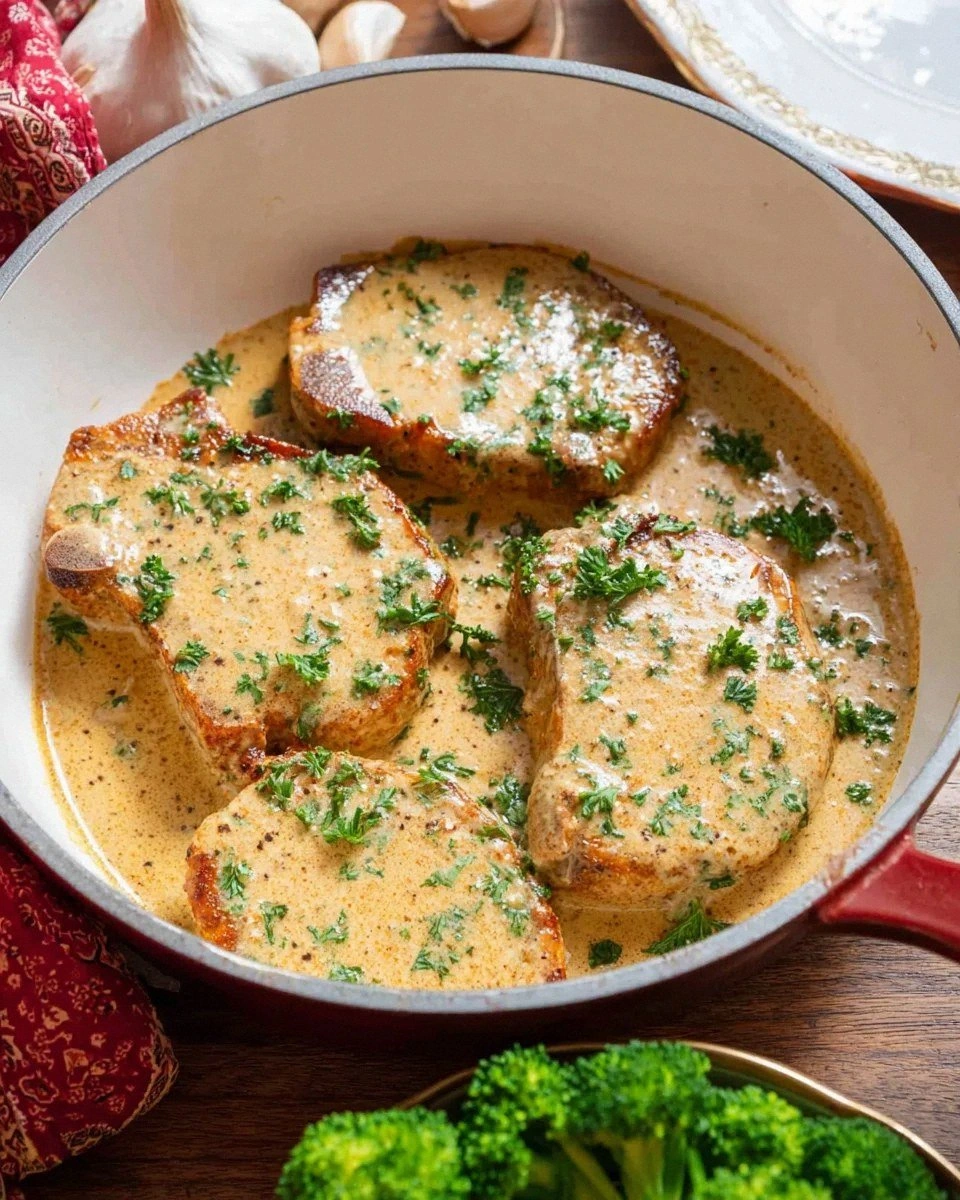
- Slide the pork chops back into the sauce for their final coating, spooning that liquid gold over each chop like you're baptizing them in flavor. Let them warm through for about thirty seconds, then serve immediately in the pan if you're going for rustic charm, or plate them up with sauce drizzled artfully if you want to impress. Garnish with fresh parsley because we eat with our eyes first, and that pop of green makes everything look fresh and intentional.
That's it — you did it. But hold on, I've got a few more tricks that'll take this to another level...
Insider Tricks for Flawless Results
The Temperature Rule Nobody Follows
Here's the thing that separates restaurant-quality pork from what most people serve at home: temperature. We're not cooking to 165°F anymore — that FDA guideline was revised years ago, but somehow nobody got the memo. Pull these chops at 145°F and let them rest. They'll climb to 150°F, leaving you with juicy, slightly pink meat that doesn't taste like cardboard. A friend tried skipping this step once — let's just say it didn't end well, and her dinner guests still mention "the great pork disaster of 2022" every time we get together.
Invest in an instant-read thermometer — not the $5 drugstore special that takes thirty seconds to register, but a decent digital one that gives you accurate readings in three seconds. The difference between perfectly cooked and overcooked is literally two minutes, and guessing is how you end up serving hockey pucks. I keep mine in the drawer next to the stove because using it isn't cheating — it's cooking smart.
Why Your Nose Knows Best
Pay attention to the aromas at each stage — they're your built-in kitchen timer. When the garlic first hits the pan, you want that bright, almost spicy smell. When it turns sweet and mellow, it's time to add the stock. The cream will smell slightly sweet and dairy-fresh when reduced properly. If it starts to smell nutty or caramelized, you've gone too far. This sounds mystical, but it's just chemistry — different compounds develop at different temperatures, and your nose is surprisingly good at detecting these changes.
I once saved a dinner party by smelling that the cream was about to break — it goes from sweet to slightly sour right before it separates. Pulling it off the heat immediately and whisking in a splash of cold cream brought it back from the brink. Your senses are more reliable than any timer once you learn to trust them.
The 5-Minute Rest That Changes Everything
Don't skip the resting period — those five minutes make the difference between juices that stay in the meat versus ones that flood your cutting board when you slice in. The proteins relax, the juices redistribute, and suddenly that chop you thought was just okay becomes something you want to write poetry about. Tent with foil, not wrap — you want to keep it warm without steaming away that beautiful crust you worked so hard to achieve.
Use this time wisely — finish your sauce, warm your plates (hot food on cold plates is a rookie mistake), pour yourself another glass of wine. By the time you're ready to serve, the pork has transformed into something that makes people close their eyes when they take the first bite.
Creative Twists and Variations
This recipe is a playground. Here are some of my favorite ways to switch things up:
The Mushroom Lover's Dream
Throw in a cup of sliced cremini mushrooms when you add the garlic to the pan. They'll soak up all those gorgeous flavors and add an earthy depth that makes this taste like something from a cozy bistro in the mountains. Baby bellas work too, but avoid white mushrooms — they release too much water and dilute your sauce. The mushrooms should be golden and slightly crispy at the edges before you add the cream.
The Spicy Southern Belle
Add a teaspoon of Cajun seasoning to the flour when dredging the pork, then swap the Parmesan for sharp white cheddar and add a diced jalapeño with the garlic. The result is this incredible fusion of creamy comfort food with a kick that builds slowly and makes your lips tingle pleasantly. Serve over grits instead of mashed potatoes for the full Southern experience.
The French Bistro Version
Replace half the cream with dry white wine, add a tablespoon of Dijon mustard, and swap the thyme for tarragon. The wine adds acidity that cuts through the richness, while the mustard emulsifies with the cream to create this silky, sophisticated sauce that tastes like it came from a Michelin-starred kitchen. This version pairs beautifully with haricots verts instead of the usual green beans.
The Low-Carb Convert
Skip the flour dredge entirely — just season and sear the pork directly. Replace the cream with full-fat coconut milk, use nutritional yeast instead of Parmesan, and thicken with a teaspoon of xanthan gum whisked in at the end. The coconut flavor disappears under all that garlic and umami, leaving you with a keto-friendly version that doesn't taste like diet food.
The Fall Harvest Edition
Add diced butternut squash when you add the garlic, letting it caramelize slightly before adding the stock. The squash breaks down partially, naturally thickening the sauce while adding this gorgeous autumn sweetness that plays beautifully against the savory elements. Fresh sage instead of thyme completes the fall flavor profile.
The Surf and Turf Upgrade
Top each chop with three seared scallops in the final minute of cooking. The scallops pick up the garlic Parmesan sauce while adding their own sweet, oceanic notes that elevate this from home cooking to special occasion worthy. It's restaurant-level impressive but surprisingly easy to execute — just make sure your scallops are patted very dry before searing.
Storing and Bringing It Back to Life
Fridge Storage
Store leftovers in an airtight container for up to four days, but here's the key: keep the pork chops whole rather than sliced. They retain moisture better this way, and you can reheat them gently without drying them out. The sauce will thicken considerably when cold — this is normal and actually helps prevent the cream from breaking during reheating. If you're planning for leftovers, slightly undercook the pork by a minute or two since it will cook further during reheating.
Freezer Friendly
This dish freezes beautifully for up to three months, but with caveats. Freeze the pork and sauce separately if possible — the sauce thaws more evenly, and you can control how much sauce each chop gets. Use freezer bags laid flat for the sauce; it thaws quickly in warm water. The pork should be wrapped tightly in plastic wrap, then foil. Thaw overnight in the refrigerator, never on the counter, and reheat gently with a splash of stock to loosen the sauce.
Best Reheating Method
Skip the microwave unless you enjoy rubbery pork and broken sauce. Instead, place the chops in a covered skillet with a tablespoon of water or stock over low heat. The steam gently warms them while the sauce relaxes back into its creamy state. Add a tiny splash of water before reheating — it steams back to perfection. If the sauce has separated, whisk in a teaspoon of cold cream while warming over low heat — nine times out of ten, this brings it back together.