I still remember the day I almost set my kitchen on fire trying to make a "simple" orange cake. The recipe I'd found online promised sunshine on a plate, but what I got was a scorched mess that tasted like bitter marmalade mixed with sadness. My neighbor—a retired pastry chef who'd been watching the smoke billow from my window—knocked on my door with a knowing smile and said, "Kid, you're doing it all wrong." That failure led me down a rabbit hole of testing, tweaking, and tasting what must have been fifty different versions until I cracked the code on what I now call my Candied Orange Almond Cake. This isn't just another citrus dessert; it's the love child of a French almond financier and a Mediterranean holiday, with crispy edges that shatter like thin ice and a moist crumb that stays heavenly for days.
Picture this: it's Sunday morning, your kitchen smells like a Sicilian grove, and you're pulling out a golden cake studded with jewel-like candied oranges. The almonds have toasted to perfection, creating this nutty backbone that makes the orange sing rather than shout. I dare you to taste this and not go back for seconds—actually, I double-dog dare you because I ate half the batch before anyone else got to try it, and I need someone to share in my shame. Most recipes get this completely wrong by treating oranges like lemons, but here's what actually works: you need to candy the oranges first, coaxing out their natural sweetness while taming that mouth-puckering pith. The result is a cake that's sophisticated enough for your fancy dinner party but approachable enough that your kids will beg for it in lunchboxes.
What makes this version stand out? Oh, where do I even begin? We're talking about a cake that manages to be both feather-light and satisfyingly substantial, with a crumb that stays moist for days (if it lasts that long, which in my house is a big if). The candied oranges create these pockets of concentrated sunshine throughout, while the almond flour gives it this incredible texture that's almost like a hybrid between a cake and a cookie. Stay with me here—this is worth it because I'm about to show you the technique that changed everything: instead of folding in the oranges at the end, we're layering them between batters, creating these stunning cross-sections that look like stained glass windows.
I've made this cake for birthdays, breakups, housewarmings, and once for a neighbor who needed convincing that I wasn't completely incompetent in the kitchen. It never fails to elicit that moment of silence when people take their first bite, followed by eyes rolling back in pure bliss. The best part? It's actually easier than it looks, once you know the tricks. Let me walk you through every single step—by the end, you'll wonder how you ever made it any other way.
What Makes This Version Stand Out
Intense Orange Flavor: Unlike most orange cakes that barely whisper citrus, this one shouts it from the rooftops. We're using the whole orange—yes, peel and all—candied to perfection so every bite bursts with that bright, sunny flavor that makes you think of Mediterranean holidays.
Almond Magic: The combination of almond flour and finely ground almonds creates this incredible texture that's both tender and slightly chewy. It's like the cake equivalent of your favorite cashmere sweater—comforting, luxurious, and impossible not to touch.
Make-Ahead Champion: This cake actually gets better after a day or two, making it perfect for entertaining. The flavors meld and deepen, while the texture becomes even more luscious. I always make two—one for immediate devouring and one for "research purposes."
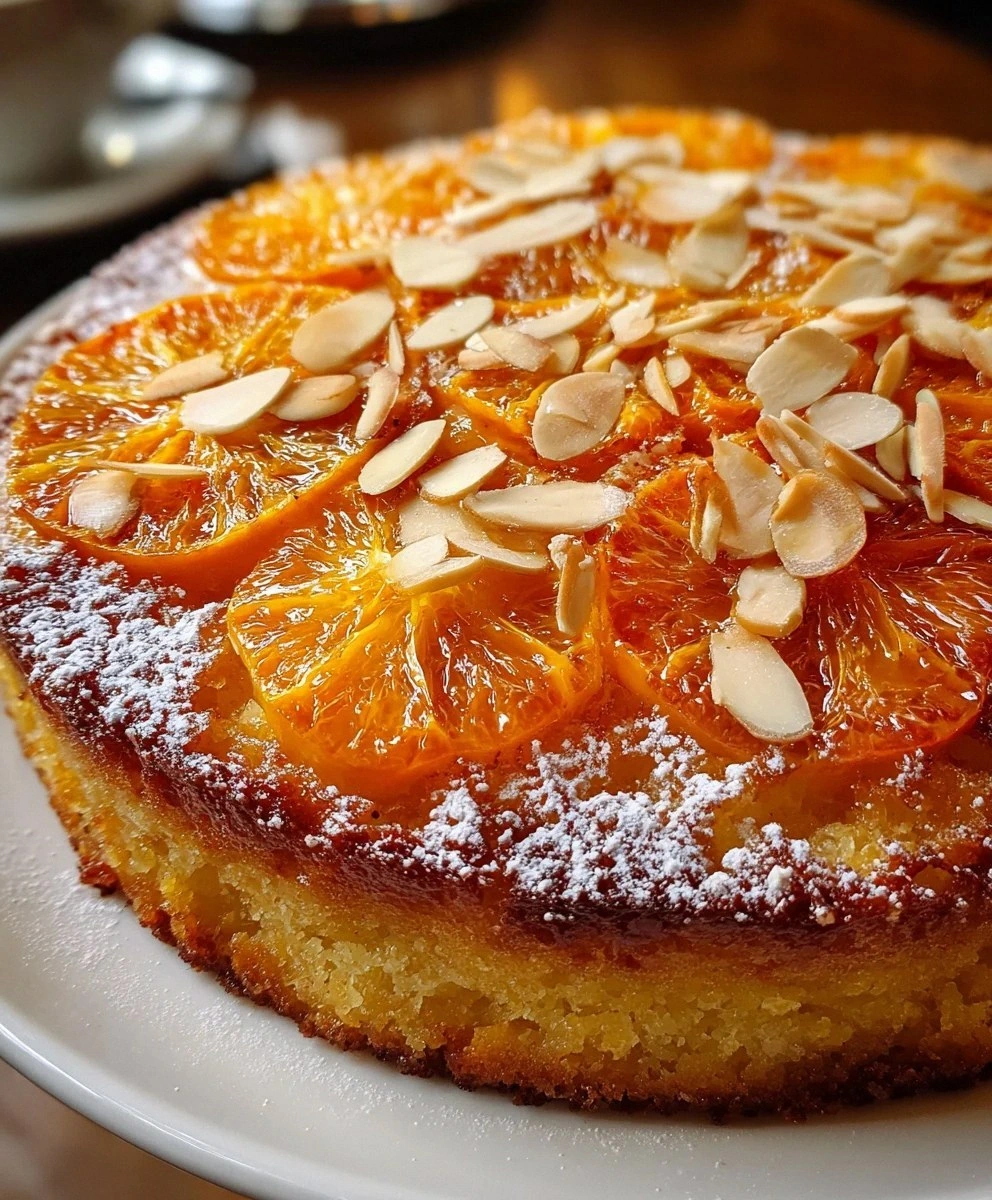
Visual Showstopper: Those cross-sections of candied orange create a stained-glass effect that's Instagram-worthy without being fussy. Your guests will think you spent hours on presentation when really, it's just the magic of the layering technique.
Texture Play: We're getting crispy edges from the caramelized sugar, soft crumb from the almond flour, and chewy bits from the candied oranges. It's like a symphony of textures in every bite, and yes, that crunch when you hit a perfectly candied orange piece is pure perfection.
Foolproof Technique: Most recipes fail because they don't address the orange's bitterness. Our candying process removes that harsh edge while concentrating the essential oils. If you've ever struggled with bitter orange desserts, you're not alone—and I've got the fix.
Crowd-Pleasing Balance: Not too sweet, not too tart, with that nutty almond backbone that makes it sophisticated enough for adults but approachable enough for kids. I've watched self-proclaimed "not dessert people" go back for thirds.
Alright, let's break down exactly what goes into this masterpiece...
Inside the Ingredient List
The Flavor Base
Let's start with the star of the show: those gorgeous oranges. You want naval oranges if you can find them—they have the perfect balance of sweetness and acidity, plus they're seedless which saves you from fishing out bitter little surprises. The trick is to candy them slowly, which transforms the peel from something you'd normally toss into candy that's better than any store-bought orange slice. We're talking about turning the whole orange into edible gold, peel and all, so pick ones that feel heavy for their size with smooth, unblemished skin.
The sugar isn't just for sweetness—it's the vehicle that carries the orange essence throughout the cake. I use a combination of white sugar for structure and a touch of brown sugar for that deep, caramel note that makes people ask "what's that amazing flavor?" Don't even think about cutting back on the sugar here; it's not just about sweetness—it's about creating the right texture and preserving those gorgeous orange slices.
The Texture Crew
Now, let me confess something: I used to think almond flour was almond flour. Wrong. There's a huge difference between the super-fine stuff you get at specialty stores and the coarser meal from the bulk bin. For this cake, you want the fine almond flour for the batter—it creates that tender, almost velvety crumb. But for the topping, we're going rogue with some roughly chopped almonds that toast to crispy perfection in the oven.
The butter needs to be at that perfect room temperature where it indents when you press it but doesn't melt. Too cold and it won't incorporate properly, too warm and your cake will be dense. I leave mine out overnight and it's perfect by morning. And please, for the love of all that's holy, use the good stuff—European-style butter with higher fat content makes a noticeable difference in richness.
The Unexpected Star
Here's where I lose some people: we're using a touch of olive oil in addition to the butter. I know, I know—trust me on this one. A tablespoon of good extra-virgin olive oil adds this incredible fruitiness that amplifies the orange flavor without making the cake taste like a salad. It's like the orange has a secret partner that makes it sing louder, clearer, better.
The eggs need to be room temperature too—cold eggs will seize up your batter and create a curdled mess. I warm mine by placing them in a bowl of warm water for five minutes. And we're using the whole egg here, not just whites or yolks, because we want that perfect balance of structure from the whites and richness from the yolks.
The Final Flourish
A splash of good vanilla extract rounds out the flavors, but here's the kicker: add a tiny pinch of cardamom. Not enough to identify it, just enough to make people say "what is that amazing warmth?" It's like adding a bass note to a song—you might not consciously hear it, but you'd miss it if it were gone.
The baking powder needs to be fresh—test it by dropping some in hot water. If it fizzes enthusiastically, you're good. If not, toss it and buy new. There's nothing worse than a flat cake, and old leavening is usually the culprit. I replace mine every six months whether I need to or not, because cake failures make me question my life choices.
Everything's prepped? Good. Let's get into the real action...
The Method — Step by Step
- First things first: we need to candy those oranges, and this is where most recipes go wrong. Slice your oranges crosswise into 1/4-inch rounds—any thinner and they'll fall apart, any thicker and they'll be too chunky. In a wide pan, combine 2 cups sugar with 1 cup water and bring it to a gentle simmer. Add the orange slices in a single layer, making sure they're mostly submerged. Now here's the key: simmer them for 45 minutes on the lowest possible heat. Don't even think about boiling—boiling makes them bitter while slow simmering extracts the pectin and creates this gorgeous, translucent candy. Turn them once halfway through, and watch as they transform from ordinary fruit slices into jeweled discs that look like sunset captured in sugar.
- While your oranges are doing their thing, let's prep the almond mixture. In a dry skillet over medium heat, toast 1 cup of sliced almonds until they smell like marzipan and turn golden brown. This should take about 5-7 minutes, but don't walk away because nuts go from perfect to burnt faster than you can say "cake." Once they're fragrant and golden, immediately transfer them to a plate to stop the cooking. I actually keep a plate in the freezer for this—cold stops the cooking process instantly. Let them cool completely before using; warm nuts will melt your butter and throw off your whole batter.
- Okay, ready for the game-changer? In your stand mixer (or with a hand mixer if you're feeling ambitious), cream together 1 cup of room temperature butter with 3/4 cup sugar until it's light and fluffy. This should take about 3-4 minutes on medium-high speed. You're looking for the mixture to turn pale yellow and increase in volume—this incorporates air that will give your cake lift. Scrape down the bowl at least twice to make sure everything is evenly incorporated. The mixture should look like pale, fluffy clouds that you'd want to sleep on.
- Now comes the fun part: add your eggs one at a time, beating well after each addition. The batter might look curdled after the second egg—don't panic, this is normal. Add the third egg and beat until the mixture comes back together. Add that splash of vanilla extract and the olive oil, and beat for another 30 seconds. The batter should look smooth and glossy, like liquid gold. If it's still curdled, your ingredients were probably too cold—just let the bowl sit for 5 minutes and beat again.
- In a separate bowl, whisk together your almond flour, all-purpose flour, baking powder, salt, and that tiny pinch of cardamom. The almond flour should be the fine kind, not the coarse meal, or your cake will be gritty. I like to sift mine through a fine-mesh sieve to make sure there are no lumps. Mix the dry ingredients well—almond flour has a tendency to clump, and nobody wants a bite of pure almond flour in their cake.
- Add the dry ingredients to the wet in three additions, mixing just until combined. Overmixing develops the gluten and makes your cake tough, and we're going for tender here. The batter will be thicker than regular cake batter—more like a very soft cookie dough. This is perfect; the almond flour absorbs more moisture than regular flour, so we need less liquid to get the right consistency.
- This next part? Pure magic. Reserve about 6-8 of your prettiest candied orange slices for the top. Chop the rest into small pieces—about the size of chocolate chips. Fold these pieces into the batter gently, making sure they're evenly distributed but not breaking them up too much. These little pockets of concentrated orange flavor are what make this cake special.
- Preheat your oven to 350°F (175°C). Grease a 9-inch springform pan and line the bottom with parchment paper. Pour in half your batter and smooth it out. Arrange some candied orange slices on top—they'll sink slightly as it bakes, creating those gorgeous cross-sections. Pour the remaining batter over them, then arrange your reserved orange slices on top in a decorative pattern. Sprinkle the toasted almonds around the edges, where they'll get beautifully golden.
That's it—you did it. But hold on, I've got a few more tricks that'll take this to another level...
Insider Tricks for Flawless Results
The Temperature Rule Nobody Follows
Here's the thing about almond flour cakes: they're finicky about temperature in ways that regular cakes aren't. I learned this the hard way after my third sunken cake. The batter needs to be at room temperature when it goes into the oven, but here's the kicker—so does your pan. A cold pan will cause the edges to set before the center is done, creating that dreaded dome that cracks and falls. I warm my pan by placing it on top of the oven while it preheats, just enough to take the chill off. And don't even think about opening that oven door before 30 minutes have passed—almond flour cakes are drama queens about temperature fluctuations.
Why Your Nose Knows Best
A friend tried skipping the toasting step once—let's just say it didn't end well. Raw almond flour has this slightly green, almost grassy taste that can ruin your whole cake. But here's what nobody tells you: the almonds should smell like marzipan, not like popcorn. If they're turning dark brown, you've gone too far. I pull mine off the heat when they just start to smell like the inside of a French bakery on a Sunday morning. That smell is your cue that the oils have released and the flavor has concentrated into something magical.
The 5-Minute Rest That Changes Everything
After your cake comes out of the oven, let it rest in the pan for exactly 5 minutes—no more, no less. Too short and it will fall apart when you try to remove it. Too long and the sugar in the candied oranges will harden, making it stick to the pan like cement. Five minutes is the sweet spot where it's set enough to hold together but still warm enough that the oranges release easily. Run a knife around the edge first, then release the springform and let it cool completely on a rack.
The Secret to Even Slices
If you've ever tried to slice an almond cake and ended up with a pile of crumbs, here's the fix: use a sharp knife dipped in hot water. The heat melts through the candied oranges cleanly, and the warm blade prevents the almond flour from crumbling. Wipe the blade between slices for picture-perfect pieces that look like they came from a fancy patisserie. I actually keep a thermos of hot water nearby when I'm serving this to guests—it's that important for presentation.
Creative Twists and Variations
This recipe is a playground. Here are some of my favorite ways to switch things up:
The Mediterranean Version
Swap out half the orange slices for thin lemon rounds, and add a tablespoon of limoncello to the batter. The combination of orange and lemon creates this incredible complexity that tastes like summer in Positano. Top it with a dollop of honey-sweetened ricotta and you'll swear you're sitting at a seaside café.
The Winter Warmer
Add a teaspoon of ground cinnamon and a pinch of cloves to the dry ingredients, and swap the olive oil for melted butter. The warm spices transform this into the perfect holiday dessert—like Christmas morning in cake form. Serve it warm with a scoop of vanilla ice cream and watch grown adults fight over the last piece.
The Tropical Escape
Replace half the orange slices with thin pineapple rounds, and add a handful of toasted coconut to the almond topping. The tropical fruit caramelizes beautifully, creating these chewy, almost candy-like pieces that transport you straight to a beach somewhere. A rum glaze takes it completely over the top.
The Chocolate Lover's Dream
Add 1/4 cup of good cocoa powder to the dry ingredients and fold in some dark chocolate chips with the candied oranges. The chocolate and orange combination is classic for a reason, but the almond adds this unexpected depth that makes it taste like something you'd pay $8 a slice for at a fancy café.
The Breakfast Version
Reduce the sugar by 1/4 cup, add a handful of poppy seeds, and serve it toasted with butter and honey. It's like the best muffin you've ever had, but in cake form. I make this version for brunch parties and it's always the first thing to disappear.
The Boozy Adult Version
Brush the warm cake with orange liqueur—Grand Marnier if you're feeling fancy, or just plain orange vodka if you're not. The alcohol burns off, leaving behind this incredible depth of flavor that makes people say "what's that amazing taste?" It's like the orange flavor turned up to eleven.
Storing and Bringing It Back to Life
Fridge Storage
Here's where almond flour cakes have a superpower: they actually get better in the fridge. Wrap it tightly in plastic wrap, then foil, and it'll keep for up to a week. The texture becomes even more moist and fudgy, and the flavors meld into something incredible. Just let it come to room temperature before serving—cold almond flour can taste slightly chalky.
Freezer Friendly
This cake freezes beautifully, which is dangerous because it means you can have cake on demand. Wrap individual slices in plastic wrap, then foil, and freeze for up to 3 months. Thaw overnight in the fridge, then let it come to room temperature. Pro tip: freeze slices before adding any toppings, then refresh them in a warm oven for 5 minutes. They'll taste like you just baked them.
Best Reheating Method
If you must reheat (and sometimes you must), wrap a slice in foil and warm it in a 300°F oven for about 8 minutes. Add a tiny splash of water before reheating—it steams back to perfection. The microwave works in a pinch, but it can make the candied oranges tough. If you do use the microwave, wrap it in a damp paper towel and heat for just 15-20 seconds.