Picture this: I’m standing in my cramped kitchen, the clock ticking toward dinner, and a sudden craving for something exotic but comforting hits me like a lightning bolt. I grab a bag of chicken breast, a splash of coconut milk, and a handful of spices that promise a tropical escape, and I swear on my grandma’s kitchen apron that I’m about to create a dish that will make everyone in the house beg for seconds.
It starts with the sound of the skillet sizzling, the aroma of garlic and cumin dancing in the air, and the sight of the chicken searing into a golden crust. The first bite is a burst of creamy coconut, a tangy tomato finish, and a subtle heat that lingers like a summer breeze. My friends who’ve tried the same dish before are stunned when I say, “I dare you to taste this and not go back for seconds.” And they’re right.
I’ve spent the last two years experimenting with every version of coconut chicken I’ve found, from the bland, overcooked versions that taste like a forgotten dream to the ones that burn the kitchen. The version I’m about to reveal is hands down the best you’ll ever make at home. It’s the kind of dish that turns a simple weekday dinner into a celebratory feast.
What makes this recipe a revelation? A secret blend of spices, a technique that locks in moisture, and a finishing touch that brings everything together. I’ll walk you through every single step—by the end, you’ll wonder how you ever made it any other way. Let’s dive in.
What Makes This Version Stand Out
- Flavor: The coconut milk provides a silky backdrop that balances the sharpness of the tomatoes and the heat from the cayenne, creating a layered taste profile that lingers on the palate.
- Texture: The chicken remains tender and juicy while the sauce thickens to a glossy consistency that coats the meat like velvet.
- Ingredient Quality: Fresh cilantro and lime juice add brightness that cuts through the richness, turning the dish into a vibrant, mouth‑watering experience.
- Cooking Method: Searing the chicken before simmering locks in juices, preventing the meat from drying out—a simple trick that elevates the entire dish.
- Time Efficiency: While the flavors develop slowly, the overall cooking time stays under 45 minutes, making it perfect for busy weeknights.
- Versatility: It pairs beautifully with steamed rice, quinoa, or even a side of sautéed greens, allowing you to customize the meal to your taste.
- Crowd Appeal: Even the pickiest eaters will fall in love with the mild heat and aromatic spices.
- Make‑ahead Potential: The sauce can be prepared a day in advance, and the chicken can be reheated without losing its succulence.
Inside the Ingredient List
The Flavor Base
Onion and garlic are the aromatic foundation. They’re sautéed until translucent, releasing their natural sweetness and building a savory backdrop that makes the spices pop. Cutting the onion into thin wedges rather than chunks helps it caramelize evenly, giving the dish a subtle depth of flavor. If you can’t find fresh garlic, a teaspoon of garlic powder works, but the fresh cloves add a bright punch that’s hard to replace.
The Texture Crew
Chicken breast is the star. It’s best cut into bite‑sized cubes to ensure even cooking and quick searing. A quick brine in saltwater for 15 minutes before cooking can help keep the meat moist, but this step is optional for those on the go. If you prefer a more robust bite, swap the breast for thighs—just remember to adjust cooking time slightly.
The Unexpected Star
Coconut milk brings creaminess and a subtle tropical sweetness that balances the acidity of the tomatoes. Opt for full‑fat coconut milk for a richer sauce; light coconut milk will make it thinner and less luxurious. If you’re watching calories, a half‑fat version works, but the texture will change.
The Final Flourish
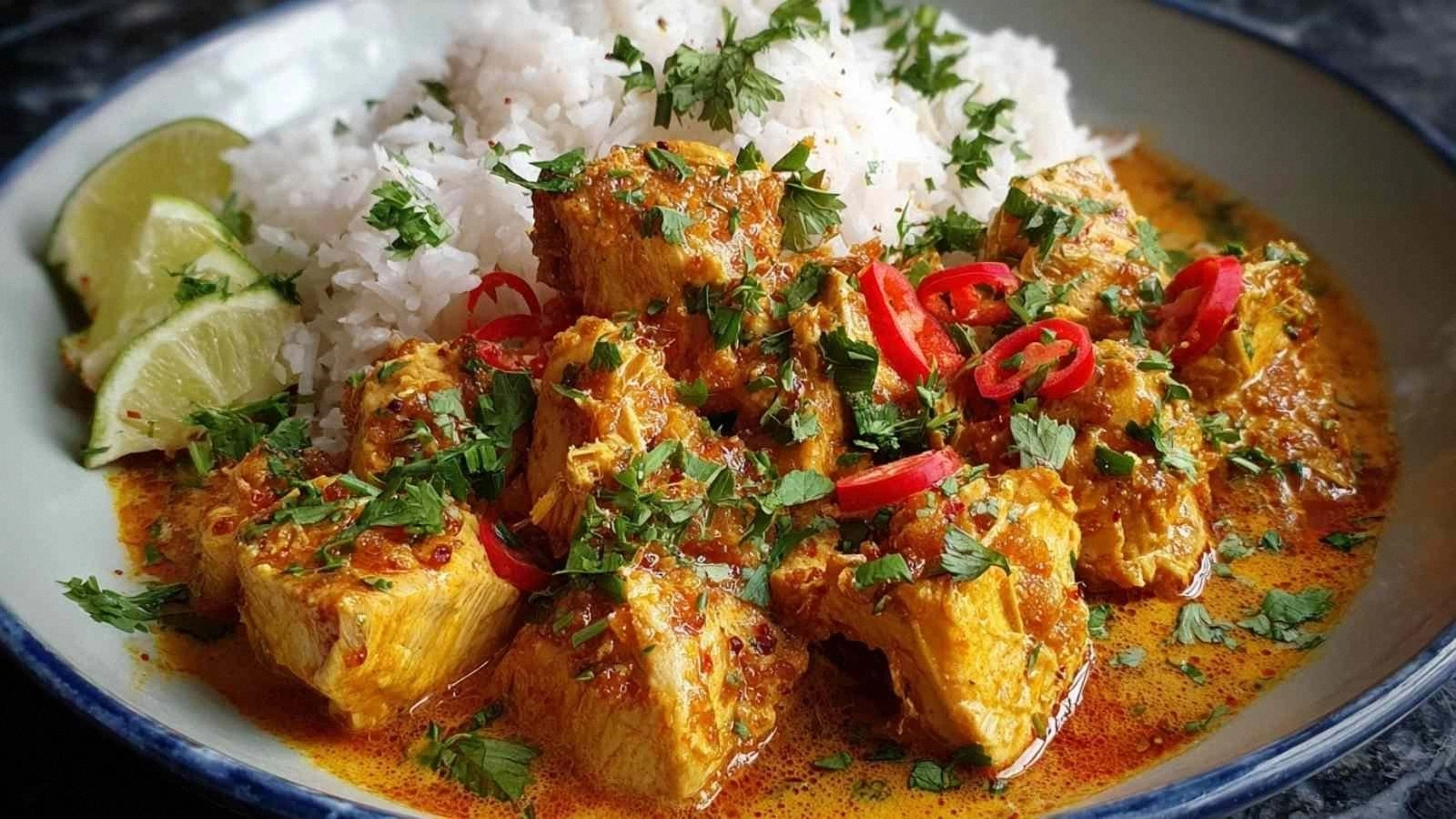
Lime juice and cilantro finish the dish with a bright, herbaceous note. The acidity of the lime cuts through the richness, while cilantro adds a fresh, slightly peppery finish. If you’re not a fan of cilantro, try parsley or basil for a different herbal profile.
Everything’s prepped? Good. Let’s get into the real action.
The Method — Step by Step
- Heat a large skillet over medium‑high heat and add two tablespoons of olive oil. Once the oil shimmers, add the cubed chicken breast in a single layer. Sear each side until golden brown, about 3–4 minutes per side. The goal is to lock in juices, so resist the urge to stir too much. When the chicken is nicely browned, remove it from the skillet and set it aside on a plate.
- In the same skillet, reduce the heat to medium and toss in the diced onion. Cook until translucent and slightly caramelized, about 5 minutes, stirring occasionally. The onion’s natural sugars will deepen the sauce’s flavor profile. When it’s ready, add the minced garlic and sauté for an additional minute until fragrant.
- Sprinkle in the cumin, paprika, and cayenne pepper, stirring constantly so the spices toast for 30 seconds. The toasted spices release a nutty aroma that signals the sauce is ready. If you’re sensitive to heat, reduce the cayenne to 1/8 teaspoon.
- Return the chicken to the skillet, making sure to coat each piece with the aromatic base. Pour in the coconut milk, diced tomatoes, and fresh lime juice. Stir everything together, allowing the sauce to come to a gentle simmer. This is the moment of truth—watch the liquid thicken slightly and the chicken start to absorb the flavors.
- Reduce the heat to low and let the mixture simmer uncovered for 15 minutes. The sauce should reduce by about a third, becoming thicker and more concentrated. This slow reduction is key to developing depth; don’t rush it by keeping the heat high.
- Stir in the fresh cilantro, reserving a handful for garnish. The cilantro should wilt quickly, releasing its bright green aroma. If you’re using a different herb, add it at this point to preserve its flavor.
- Taste the sauce and season with salt and pepper as needed. The coconut milk adds richness, so a pinch of salt is usually sufficient. If you prefer a slightly sweeter finish, a dash of brown sugar can balance the acidity.
- Serve the chicken and sauce over steamed rice, spooning the sauce generously over each portion. Garnish with the remaining cilantro and a wedge of lime on the side for extra zing. The dish is now ready to impress.
That's it — you did it. But hold on, I've got a few more tricks that'll take this to another level.
Insider Tricks for Flawless Results
The Temperature Rule Nobody Follows
Cooking at a steady medium‑low heat is essential. Too high, and the sauce will scorch; too low, and the chicken won’t brown. I discovered that a heat range of 250–300°F (120–150°C) works best for this dish. Use a thermometer to keep the skillet in that sweet spot.
Why Your Nose Knows Best
Smell the sauce as it simmers. When the aroma is rich, slightly sweet, and a hint of citrus, it’s almost ready. If it starts smelling sour, the tomatoes have broken down too much—lower the heat and let it simmer longer.
The 5‑Minute Rest That Changes Everything
After removing the dish from the heat, let it rest for five minutes. The sauce thickens as it stands, and the flavors meld. This short pause prevents the chicken from drying out and gives the sauce a silky finish.
Don’t Skip the Cilantro
Cilantro is more than garnish; it’s a flavor enhancer. If you’re not a fan, try basil or mint for a different herbal twist. The key is to add it at the end so the fresh flavors don’t evaporate.
Use a Skillet That Retains Heat
A heavy‑bottomed skillet, like cast iron or stainless steel, distributes heat evenly. This prevents hot spots that could burn the sauce or undercook the chicken. If you don’t have a heavy skillet, a non‑stick pan works but keep a close eye on the heat.
Creative Twists and Variations
This recipe is a playground. Here are some of my favorite ways to switch things up:
Spicy Jerk Chicken
Swap the cumin and paprika for a jerk seasoning blend and add a pinch of allspice. The result is a Caribbean‑inspired kick that pairs wonderfully with coconut rice.
Vegetarian Coconut Curry
Replace the chicken with chickpeas and add diced sweet potato. The hearty veggies soak up the sauce, creating a filling meal that’s just as satisfying.
Low‑Calorie Version
Use skinless chicken thighs, replace coconut milk with light coconut milk, and reduce the olive oil to a teaspoon. The dish still delivers on flavor but with fewer calories.
Breakfast Twist
Serve the sauce over scrambled eggs instead of rice. The creamy coconut sauce turns a simple breakfast into a brunch‑worthy dish.
Gluten‑Free Option
Pair the dish with quinoa or cauliflower rice. The nutty grains complement the coconut flavors without adding gluten.
Herb‑Infused Variation
Replace cilantro with fresh dill and add a splash of lemon juice. The dill adds a subtle briny note that brightens the dish.
Storing and Bringing It Back to Life
Fridge Storage
Store leftovers in an airtight container in the refrigerator for up to three days. The sauce will thicken slightly, so a quick stir before reheating restores its silky texture. When reheating, add a splash of water or broth to loosen it back up.
Freezer Friendly
Freeze in portioned containers for up to two months. Thaw overnight in the refrigerator, then reheat on the stovetop or in a microwave, adding a little coconut milk or water to bring back the sauce’s consistency.
Best Reheating Method
Reheat gently over low heat, stirring frequently. If the sauce has thickened too much, add a tablespoon of coconut milk or a splash of water to achieve the desired consistency. A quick 5‑minute rest after reheating allows the flavors to settle.